Strong With Dumbbells: A Gentle Home Routine for Older Beginners
tl;dr: A simple, safe full-body dumbbell routine for older beginners who want to build strength at home.
Language + audio
ಕನ್ನಡ translation available
Health gear i actually use
These are the small, practical buys I keep recommending because they make the habit easier to start and easier to repeat.
Show items
Health gear i actually use
These are the small, practical buys I keep recommending because they make the habit easier to start and easier to repeat.
Yoga mat
A simple base for home workouts
Helps make the floor work, mobility work, and stretching feel easy to start.
Buy yoga mat →
Dumbbells
2.5 kg adjustable dumbbells
A gentle starting point for strength work that still feels useful fast.
Buy 2.5 kg dumbbells →
Resistance band
Bold fit resistance band
Useful for warmups, mobility work, and lighter strength sessions.
Buy resistance band →
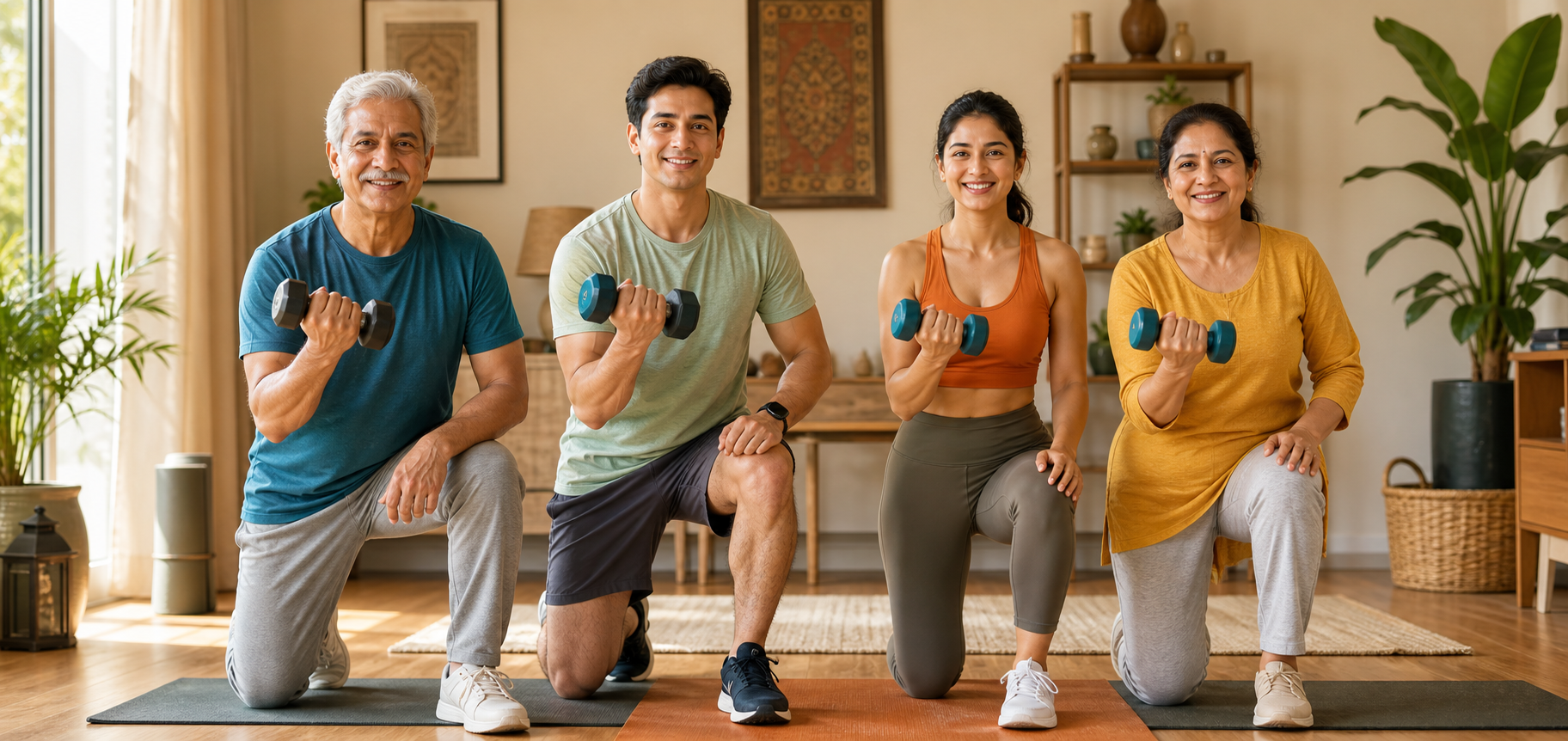
Strong With Dumbbells
If the chair routine feels comfortable, a pair of light dumbbells is a beautiful next step.
Not because your parents need to turn into gym people. They do not. A 2.5 to 5 kg pair simply gives the body a little more reason to get stronger: stronger legs for stairs, stronger arms for bags, a steadier back, and more confidence in everyday movement.
If walking is the habit, dumbbells are the upgrade. That is how ordinary daily movement becomes lasting strength.
For most older beginners, start with 2.5 kg dumbbells. Move to 5 kg only when every repetition feels smooth and controlled. The right weight is not the one that looks impressive. It is the one they can use safely next week too.
If you want a simple place to start, I keep a heavier option here: 5 kg dumbbells.
If you are a millennial or Gen Z adult reading this, this is a nice routine to do beside a parent. It takes less time than deciding what to watch together, and it is a far better long-term investment.
Before You Pick Up The Weights
- Choose dumbbells with an easy-to-hold handle.
- Keep a sturdy chair nearby for balance and rest.
- Move slowly. No swinging, no rushing, no holding the breath.
- Stop for sharp pain, dizziness, or chest discomfort.
- If there is a recent surgery, serious joint pain, uncontrolled blood pressure, or a heart condition, ask a doctor or physiotherapist first.
The Full-Body Dumbbell Routine
Do one exercise at a time. Start with one set of 6 to 8 repetitions. Rest for 45 to 60 seconds whenever needed. Two or three sessions a week is enough to begin.
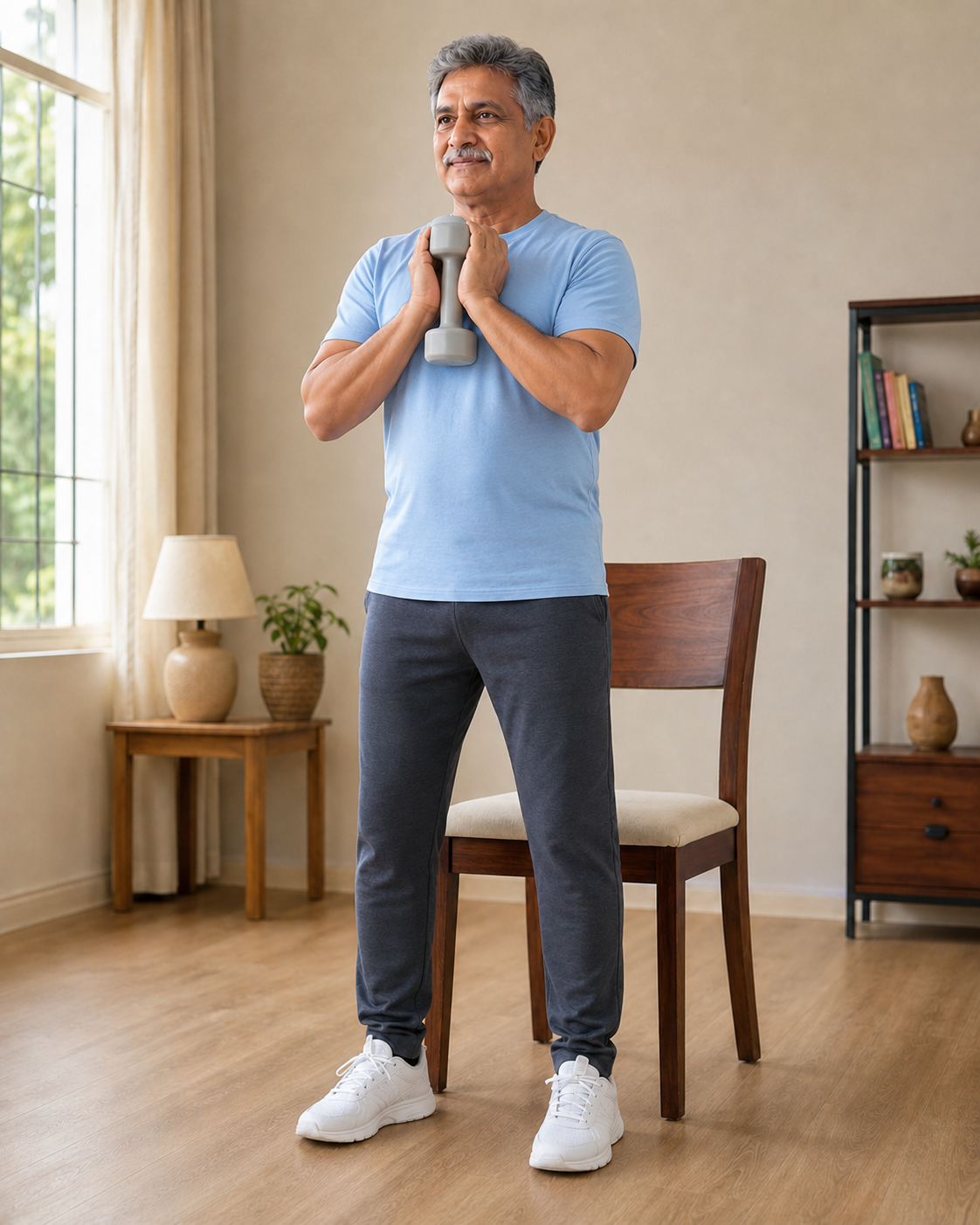
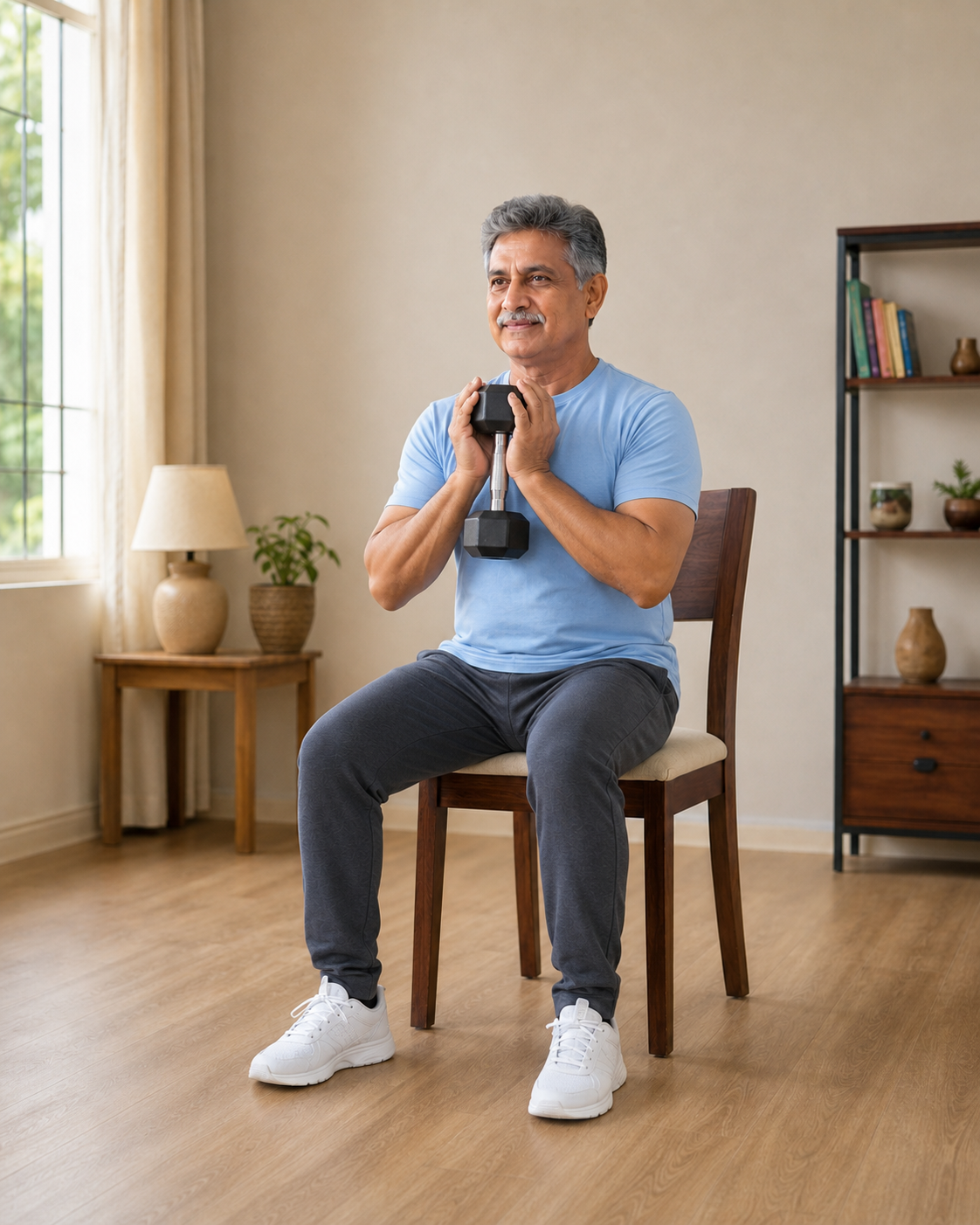
1. Goblet Chair Squat
Works: thighs, glutes, hips, and core.
Hold one dumbbell close to the chest with both hands. Stand in front of a sturdy chair, sit back slowly until you touch the chair, then stand again by pressing through the heels.
This is not about sitting as low as possible. It is about making the everyday sit-to-stand movement stronger and easier.
Short cue: keep the dumbbell close, chest tall, and knees comfortable.
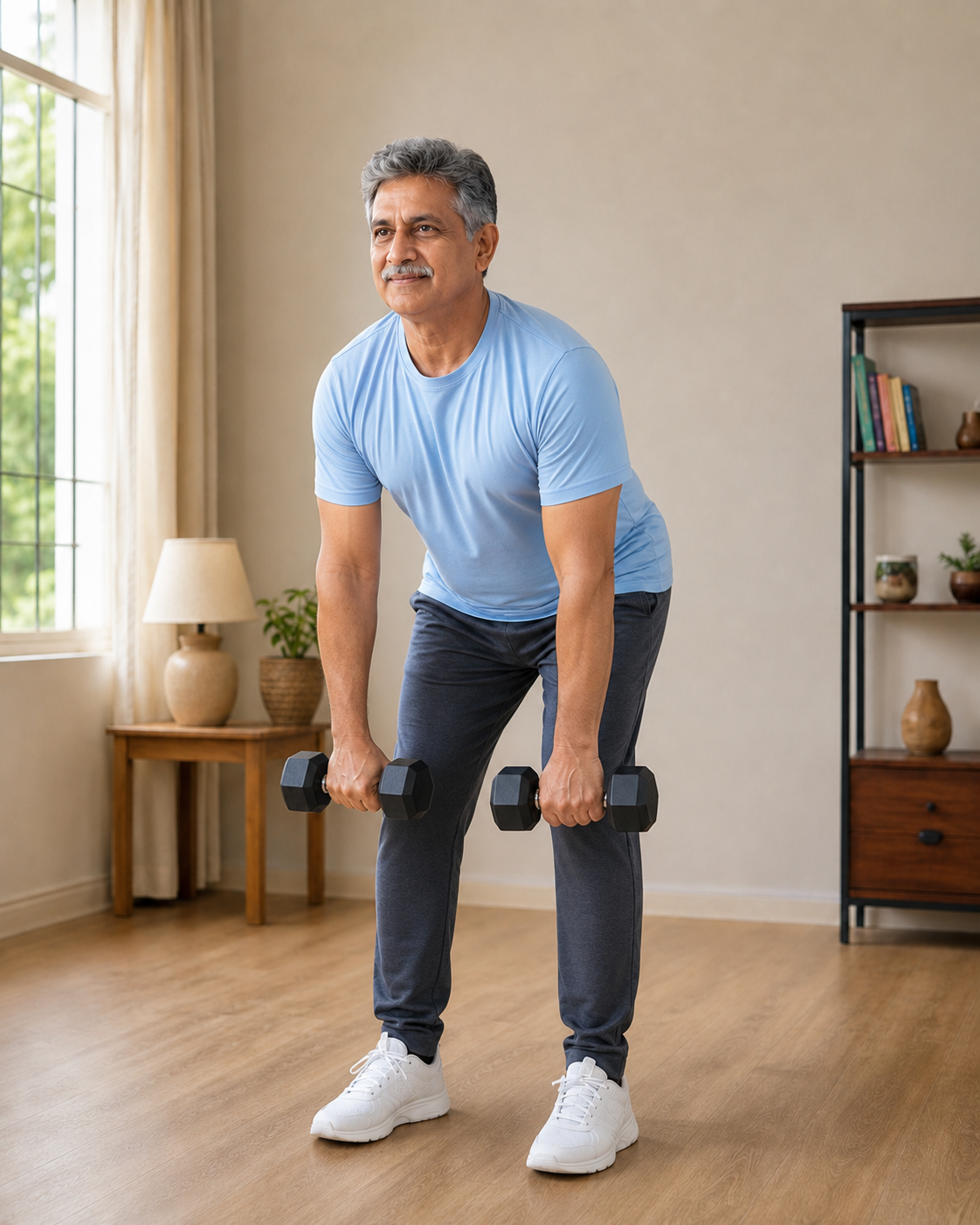
2. Dumbbell Romanian Deadlift
Works: hamstrings, glutes, lower back support, and grip.
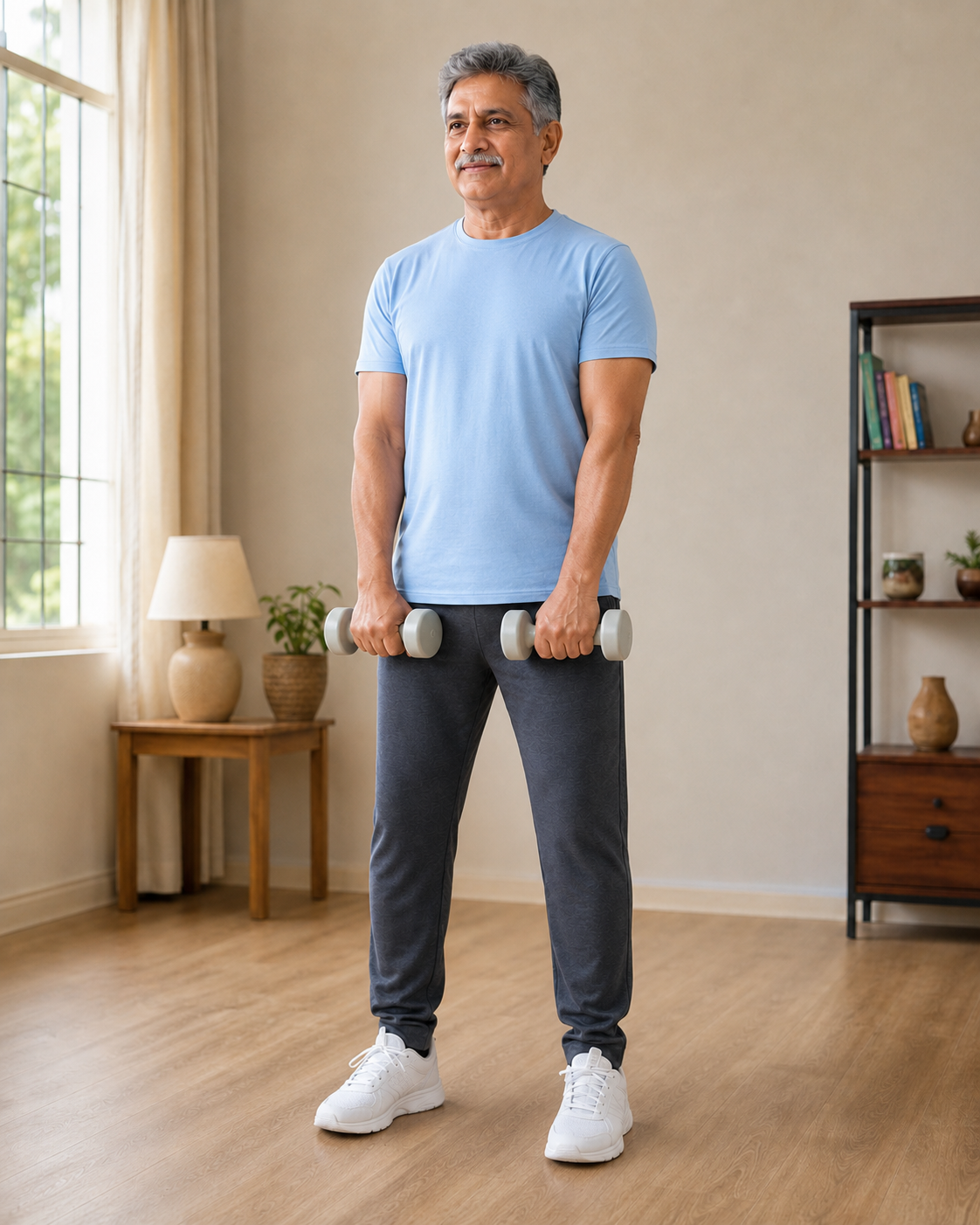
Hold one dumbbell in each hand in front of the thighs. Keep a soft bend in the knees. Push the hips gently back as the dumbbells slide down the legs to about knee height. Stand tall by squeezing the glutes.
This is a hip movement, not a reach-for-the-floor movement. Stop well before the back rounds.
Short cue: hips back, back long, stand tall.
3. Supported One-Arm Row
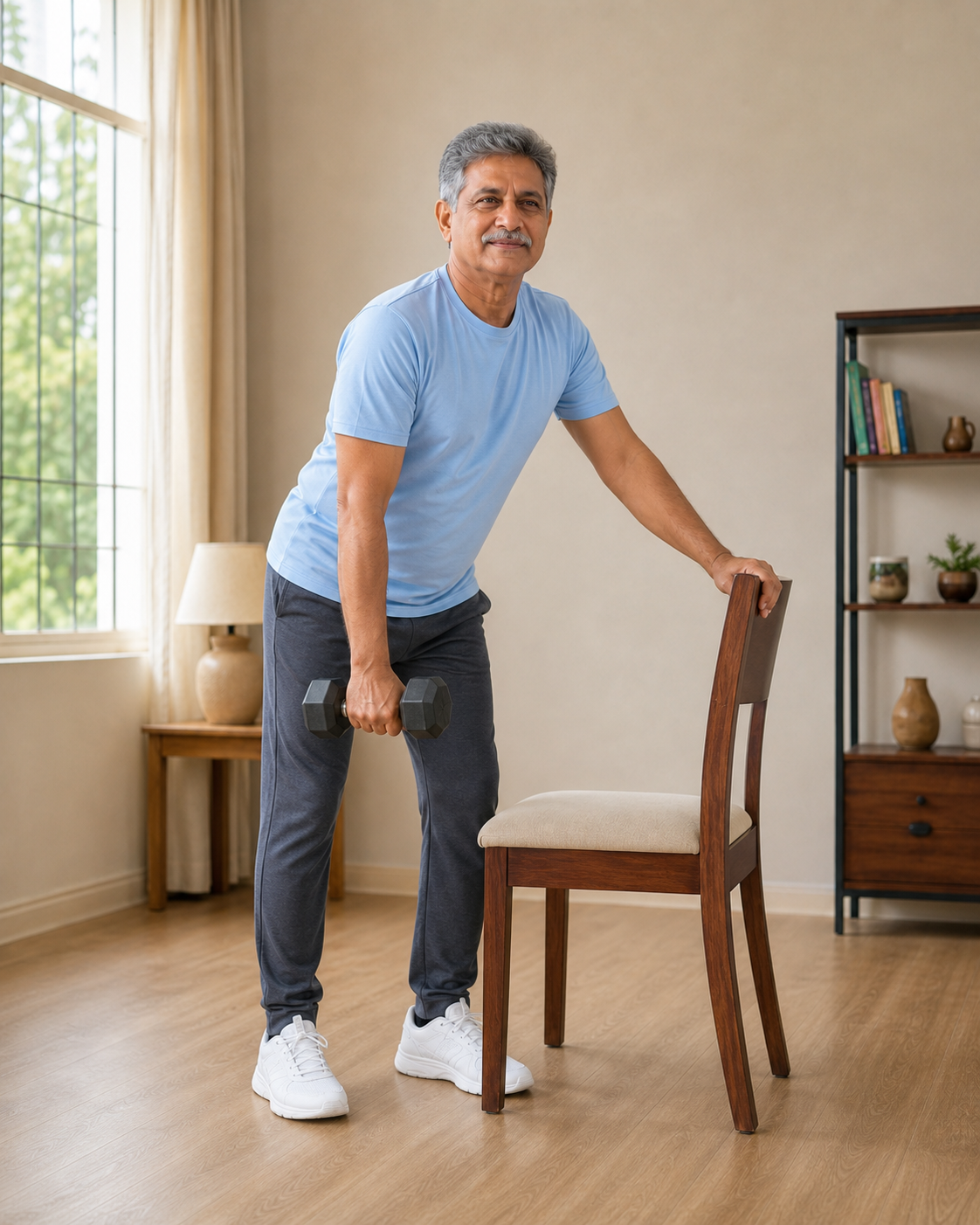
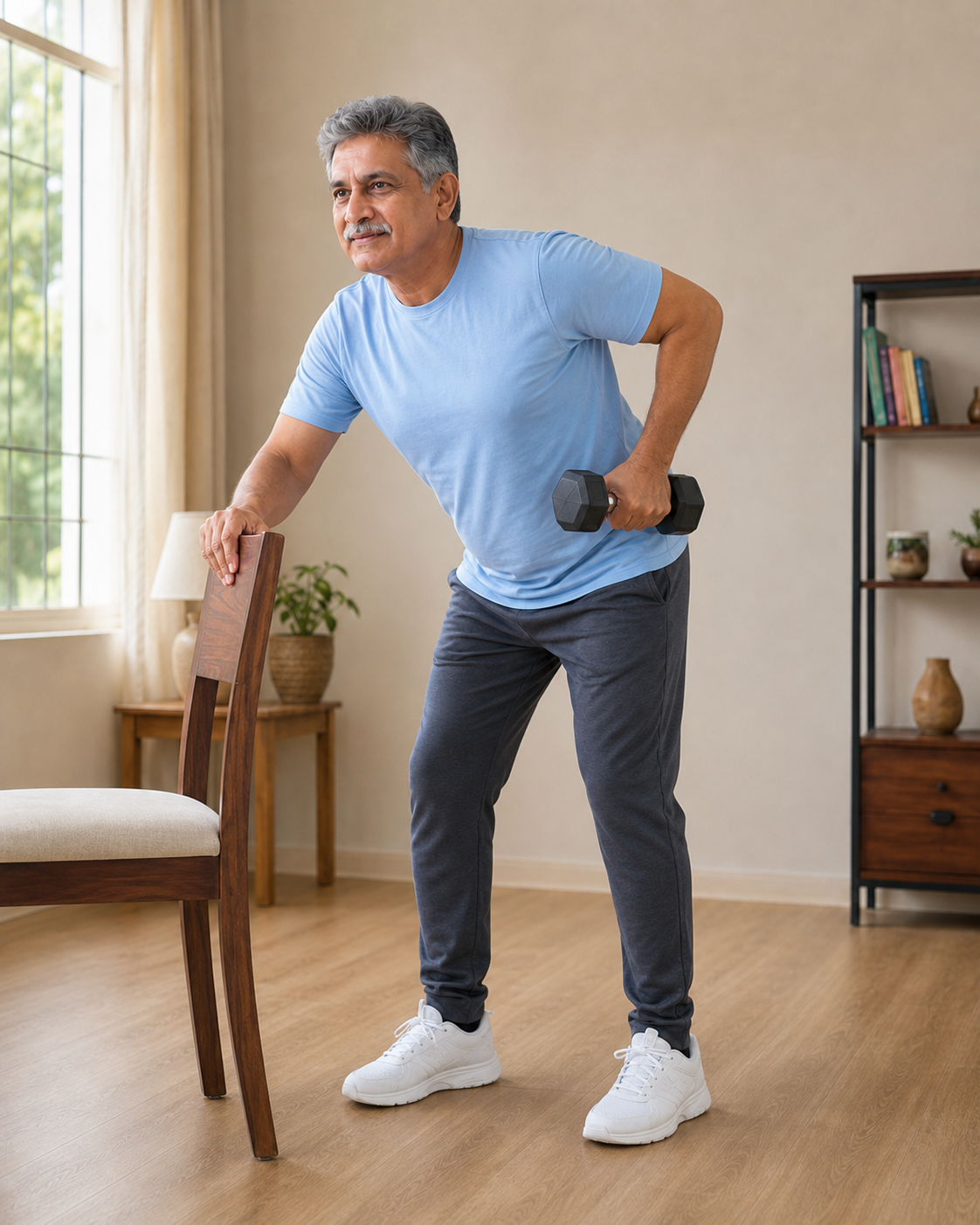
Works: upper back, lats, biceps, and posture muscles.
Place one hand on the back of a sturdy chair. Hold one dumbbell in the other hand. Pull the weight slowly toward the hip, pause, and lower it with control. Complete all repetitions, then switch sides.
Rows are especially useful for people who spend years leaning toward phones, screens, or kitchen counters.
Short cue: pull the elbow toward the pocket, not up toward the ear.
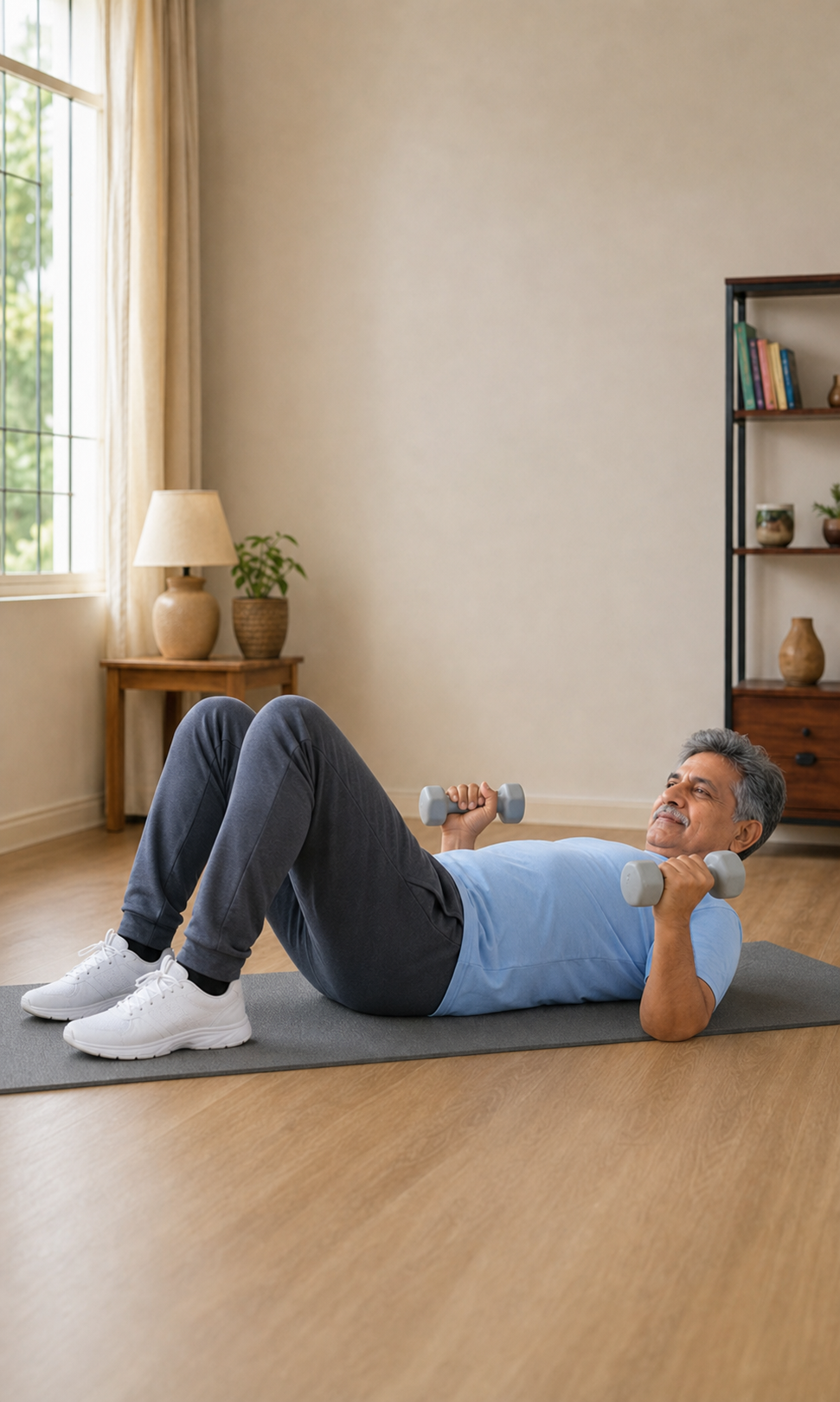
4. Dumbbell Floor Press
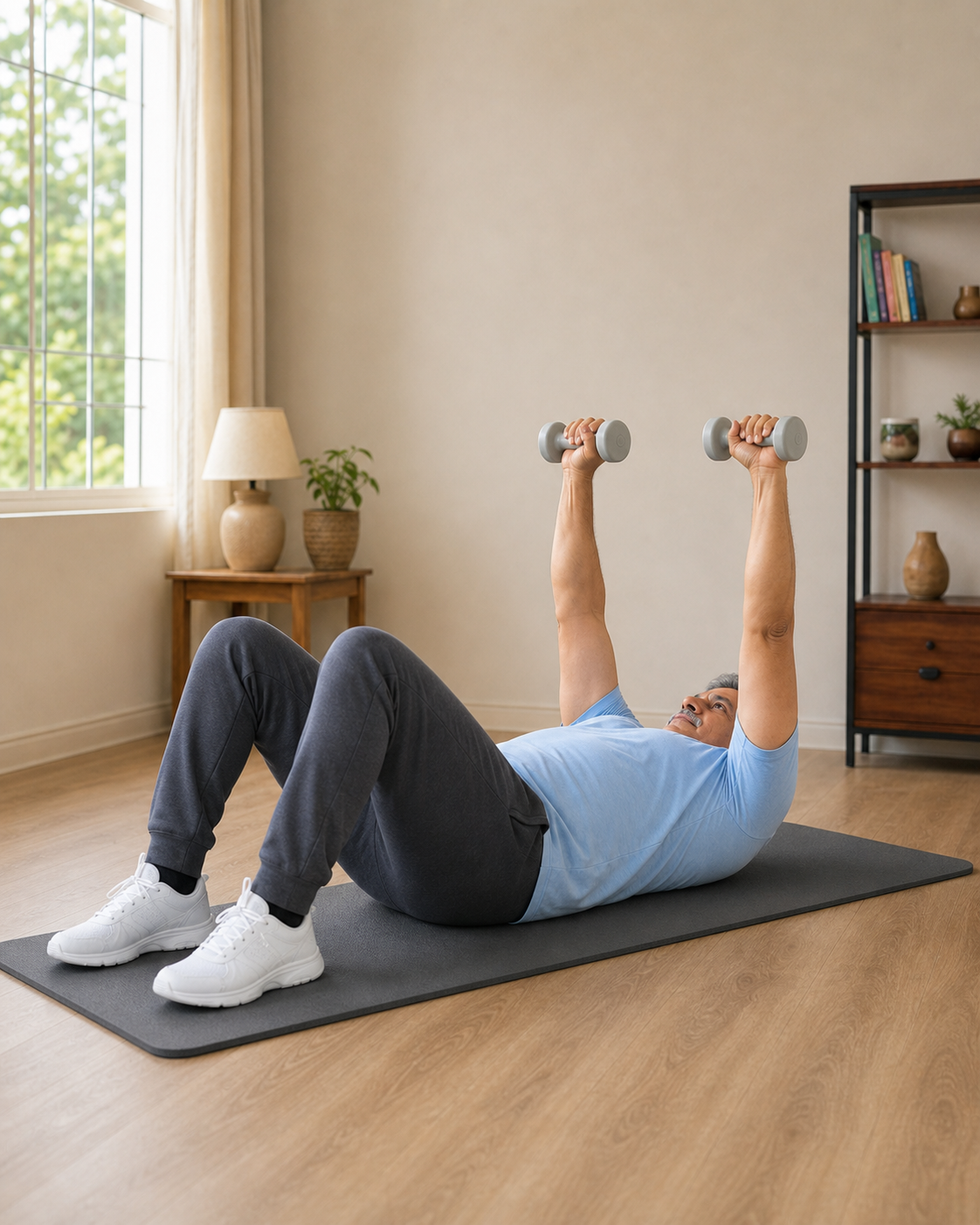
Works: chest, shoulders, and triceps.
Lie on an exercise mat with knees bent and feet flat. Hold a dumbbell in each hand near the chest. Press both weights slowly toward the ceiling, then lower until the upper arms gently touch the floor.
The floor makes this friendlier than a bench press because it limits how far the shoulders travel.
Short cue: wrists stacked over elbows; lower slowly.
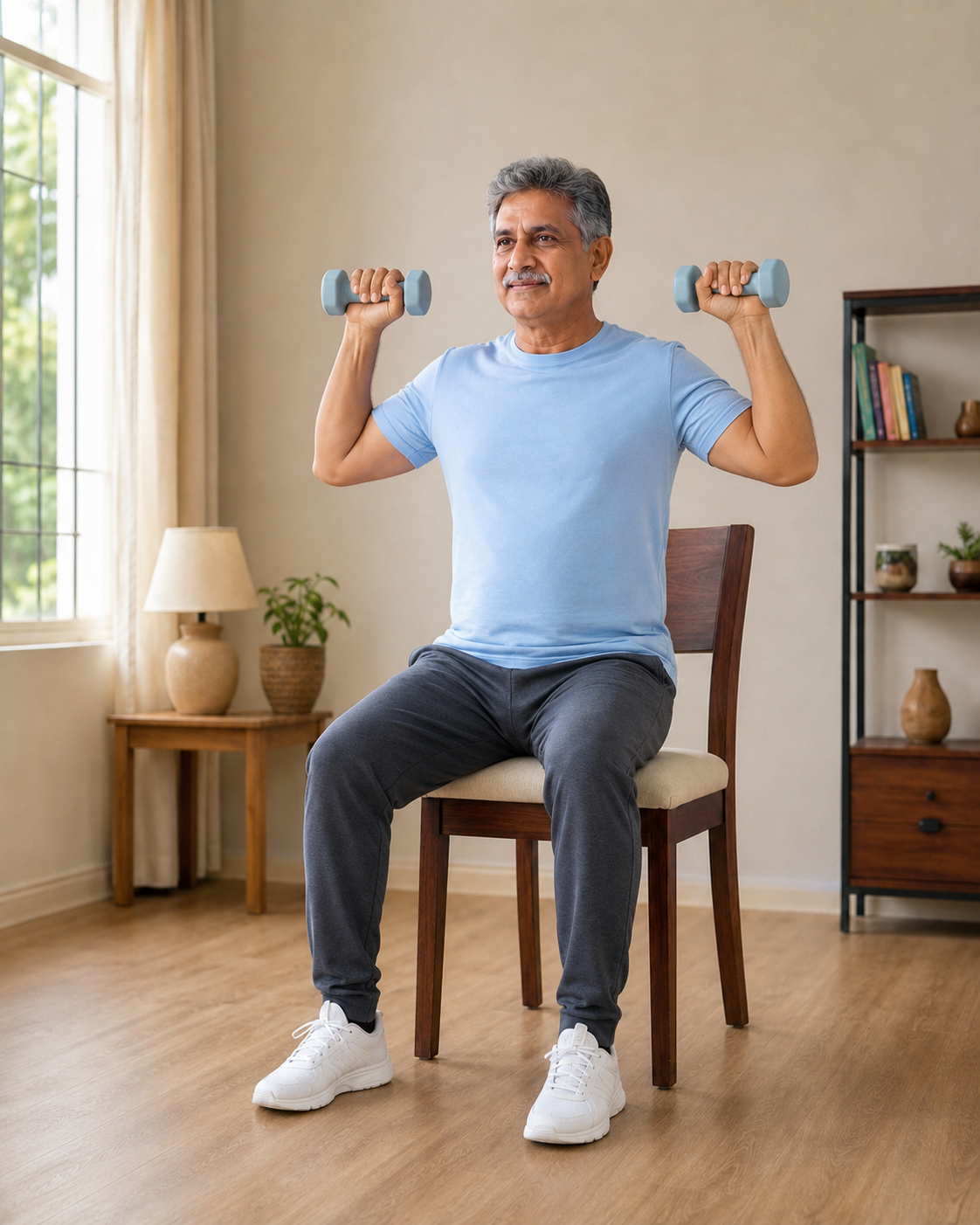
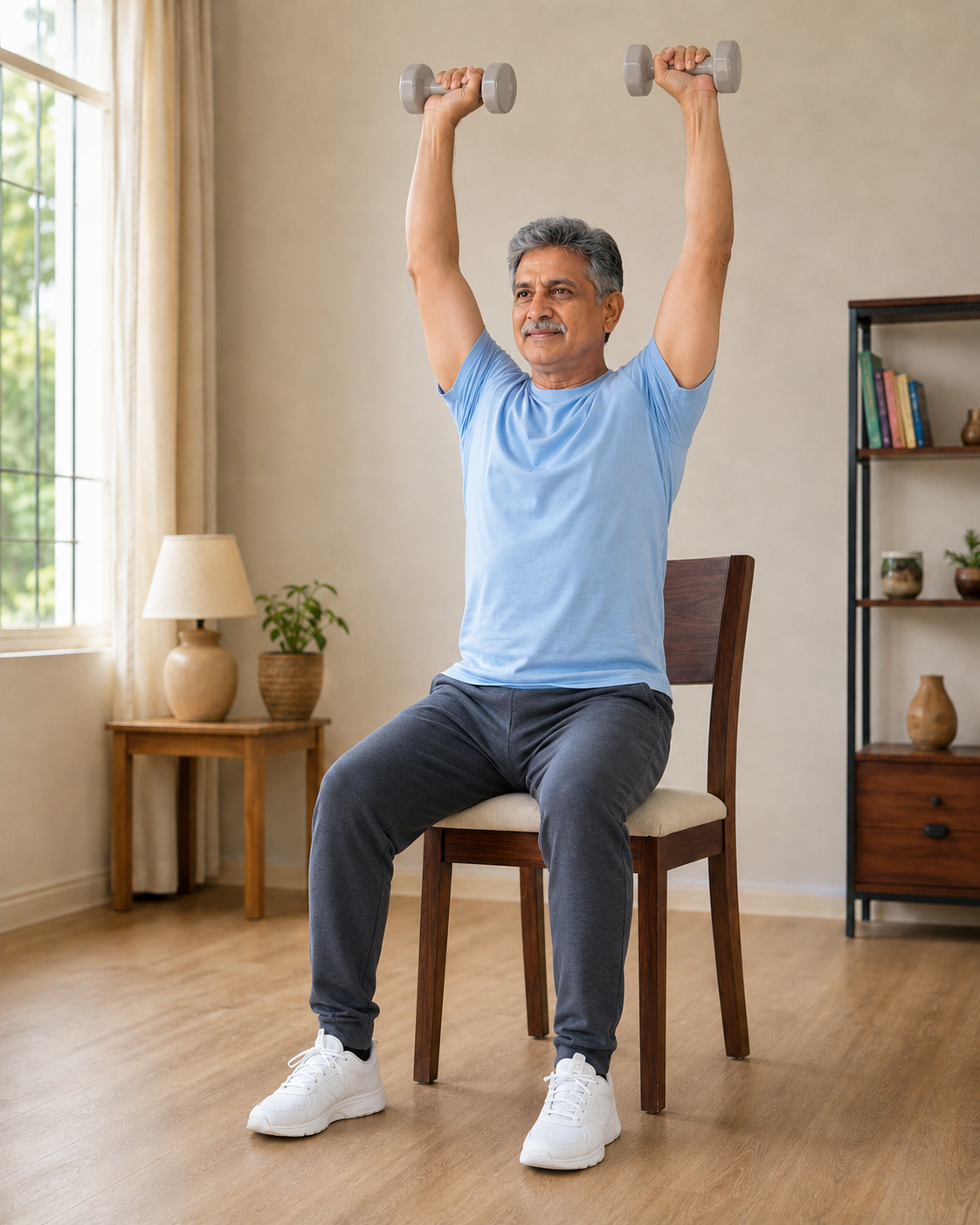
5. Seated Overhead Press
Works: shoulders, upper back, and triceps.
Sit tall on a chair with one dumbbell in each hand at shoulder height. Press the weights up only as far as feels comfortable, then bring them back down slowly.
If both weights feel difficult, do one arm at a time or use a lighter weight.
Short cue: ribs down, shoulders relaxed, no leaning back.
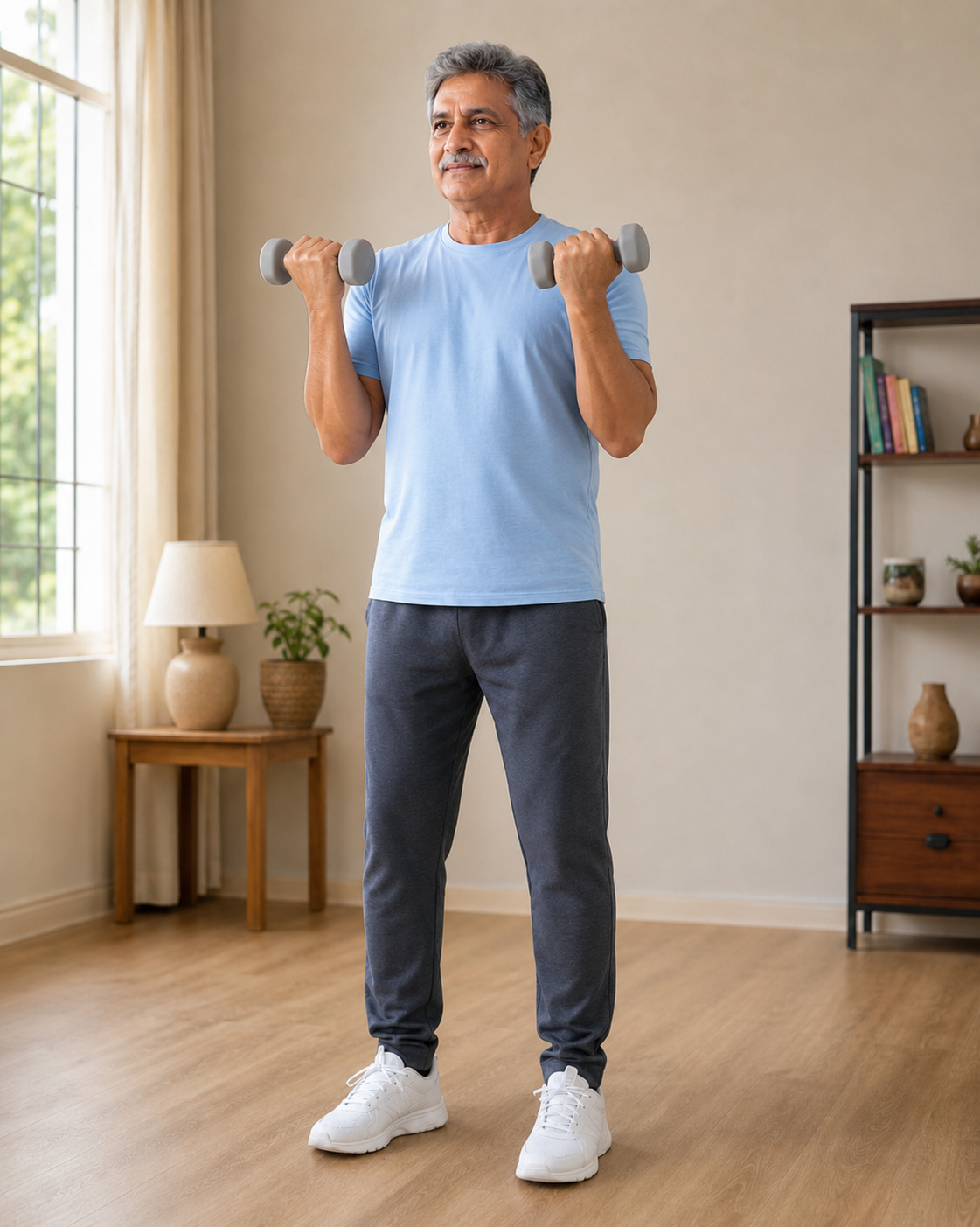
6. Biceps Curl
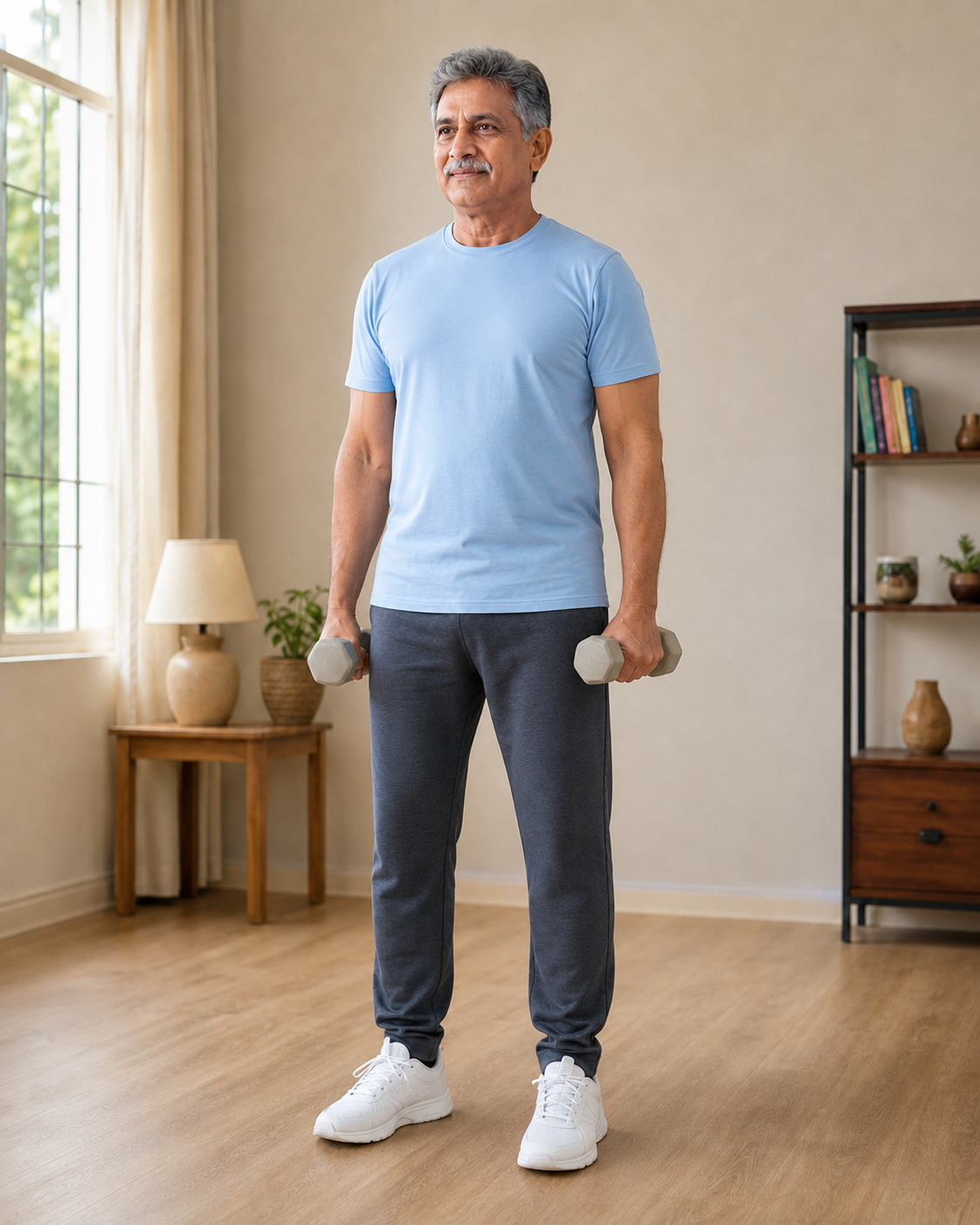
Works: biceps, forearms, and grip.
Stand tall or sit on a chair. Hold the dumbbells by your sides with palms facing forward. Curl them up slowly, pause, and lower with control.
It may look like the classic gym move, but strong arms make everyday carrying feel easier.
Short cue: elbows stay close to the body; do not swing.
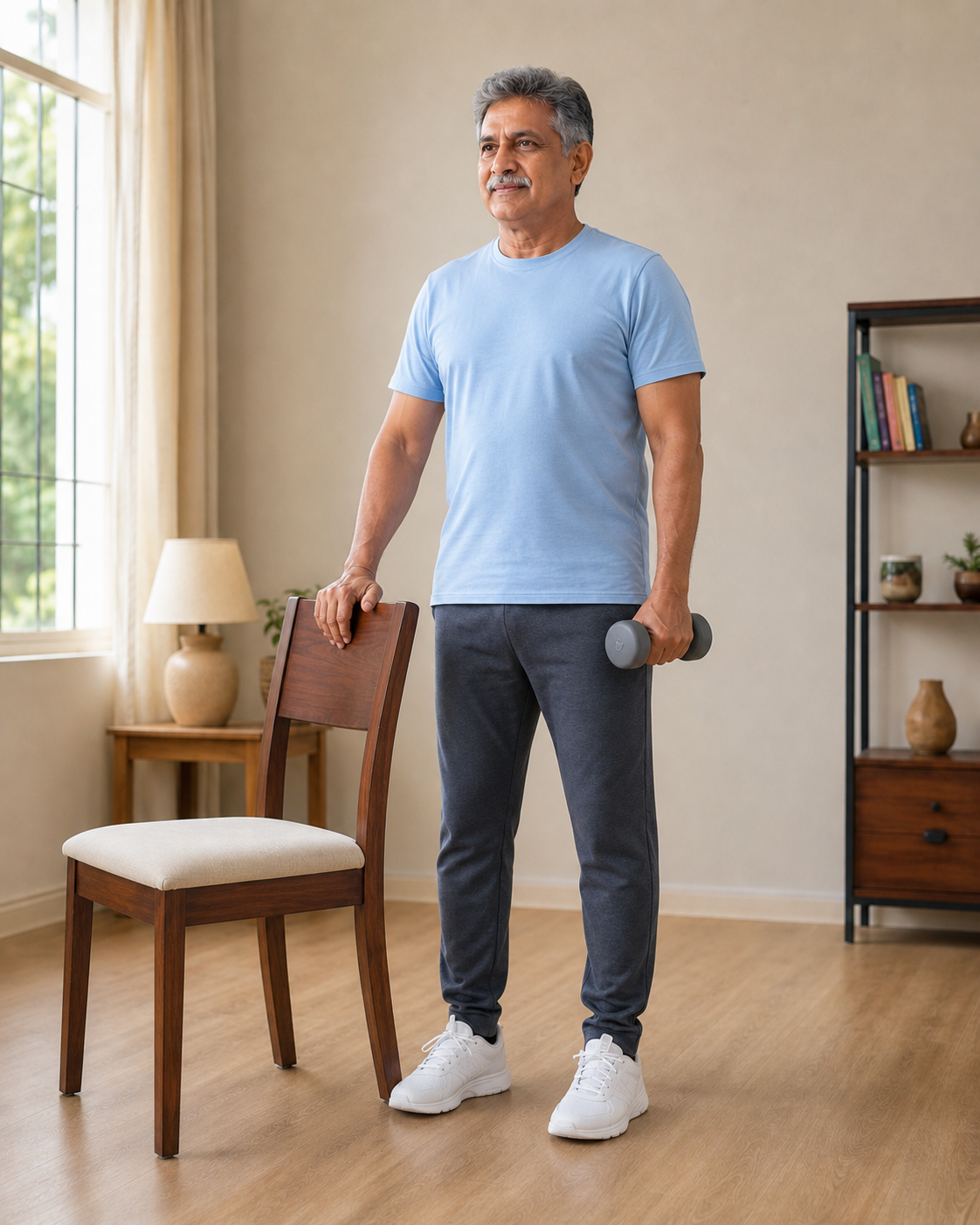
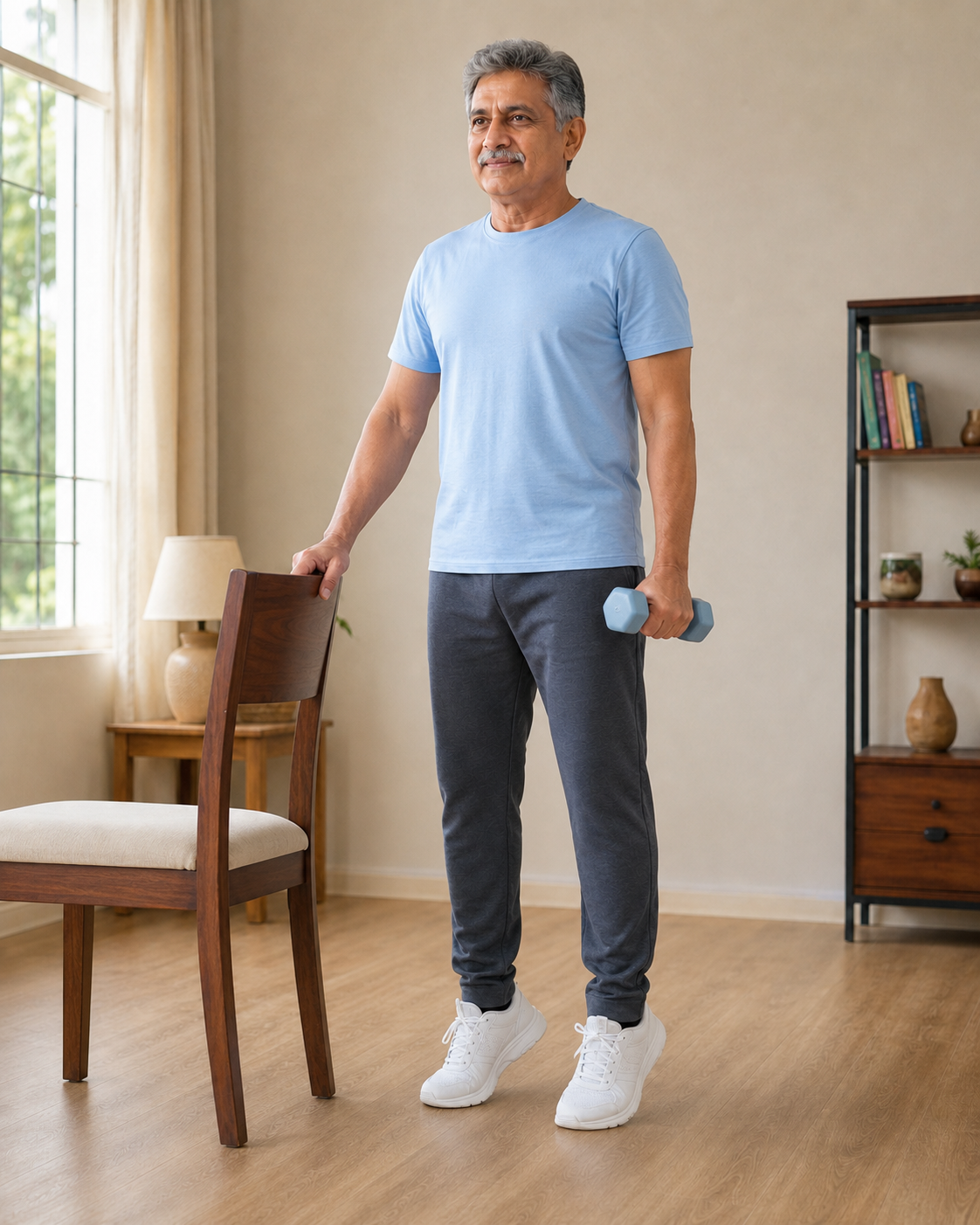
7. Dumbbell Calf Raise
Works: calves, ankles, balance, and walking strength.
Hold one dumbbell in one hand and lightly hold a chair with the other. Rise onto the balls of both feet, pause, then lower the heels slowly.
This is a simple way to make walking and stair climbing feel more stable.
Short cue: use the chair for balance, not to pull yourself up.
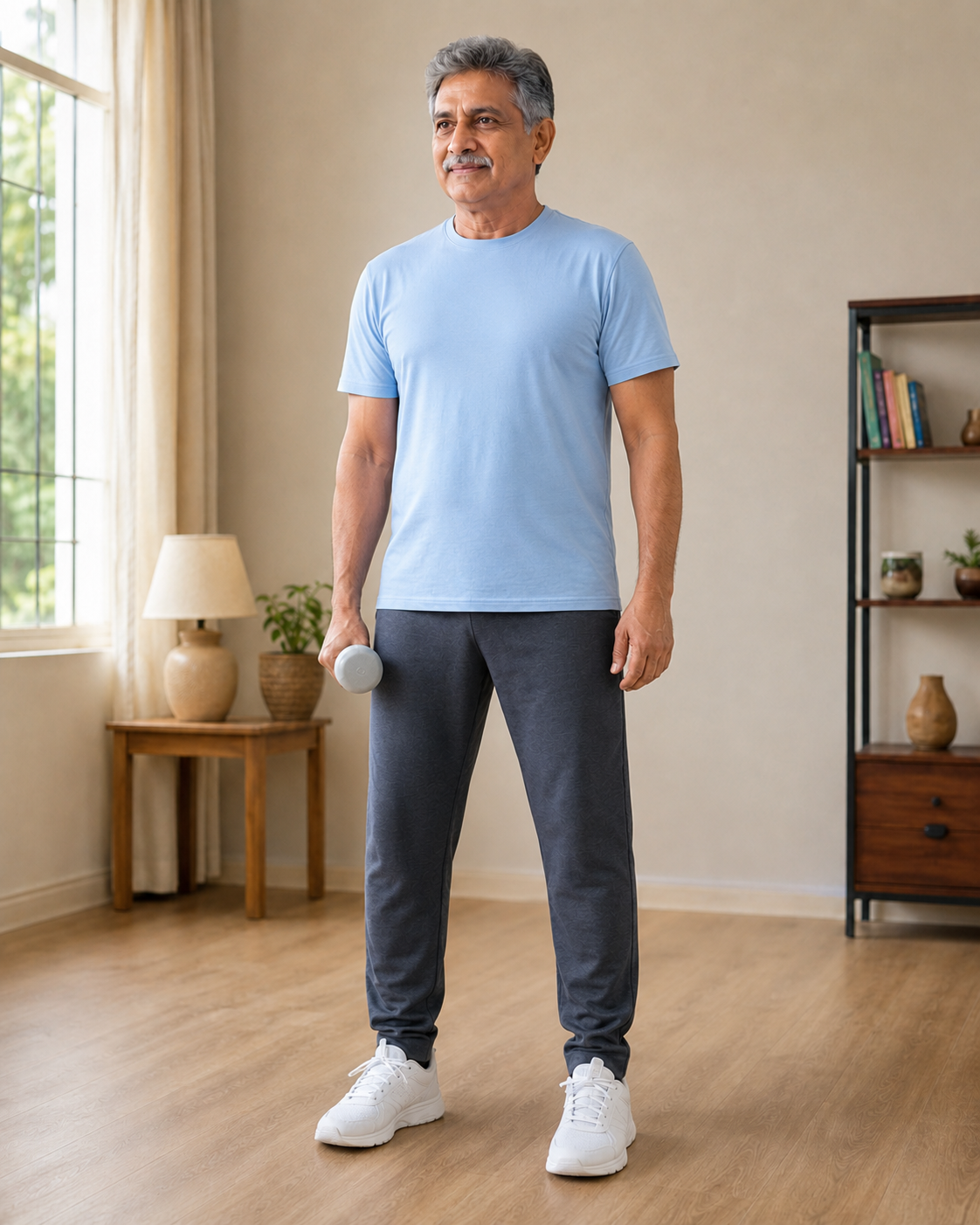
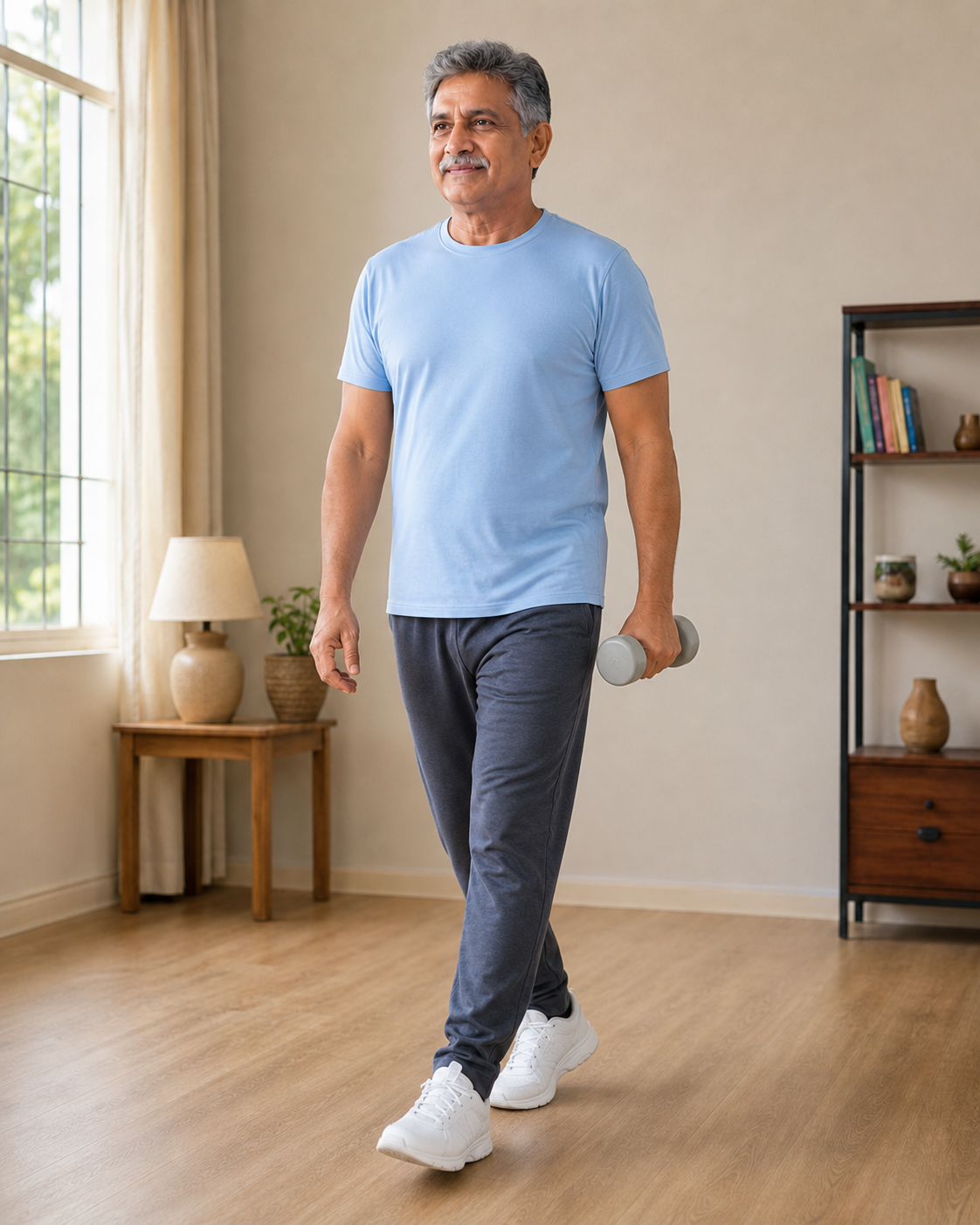
8. Suitcase Carry
Works: core, grip, shoulders, and posture.
Hold one dumbbell by one side like a suitcase. Walk slowly across the room for 20 to 30 seconds while staying tall. Put it down, rest, then repeat on the other side.
This is wonderfully practical. It teaches the body to carry groceries, a water can, or a bag without collapsing to one side.
Short cue: walk tall; do not lean toward or away from the weight.
A Simple Starting Plan
- Week 1 and 2: one set of 6 to 8 repetitions for each exercise.
- Week 3 and 4: add a second set if the first still feels easy and controlled.
- Increase to 5 kg only after 2.5 kg feels steady for every movement.
- Keep the routine to 20 to 30 minutes. Finishing with energy is a win.
What Matters Most
The goal is not to make parents sore. The goal is to make normal life lighter.
When your parent can stand from a chair more easily, carry their own groceries, walk longer without feeling tired, or lift a grandchild with more confidence, that is strength training doing its real job.
Start light. Be patient. Celebrate consistency.
And if this article made you think of someone at home, send it to them with one line: “Let us try this together on Sunday.”
If they have not started walking regularly yet, begin with Walking Is Good, But It Is Not Enough.
If they are just starting from zero, use Strong For Them: A Safe Home Workout for Parents Over 50 as the gentler entry point and come back here after the chair routine feels comfortable.