Strong For Them: A Safe Home Workout for Parents Over 50
tl;dr: A beginner-friendly strength routine for parents and grandparents over 50 who are starting from zero.
Language + audio
ಕನ್ನಡ translation available
Health gear i actually use
These are the small, practical buys I keep recommending because they make the habit easier to start and easier to repeat.
Show items
Health gear i actually use
These are the small, practical buys I keep recommending because they make the habit easier to start and easier to repeat.
Yoga mat
A simple base for home workouts
Helps make the floor work, mobility work, and stretching feel easy to start.
Buy yoga mat →
Dumbbells
2.5 kg adjustable dumbbells
A gentle starting point for strength work that still feels useful fast.
Buy 2.5 kg dumbbells →
Resistance band
Bold fit resistance band
Useful for warmups, mobility work, and lighter strength sessions.
Buy resistance band →
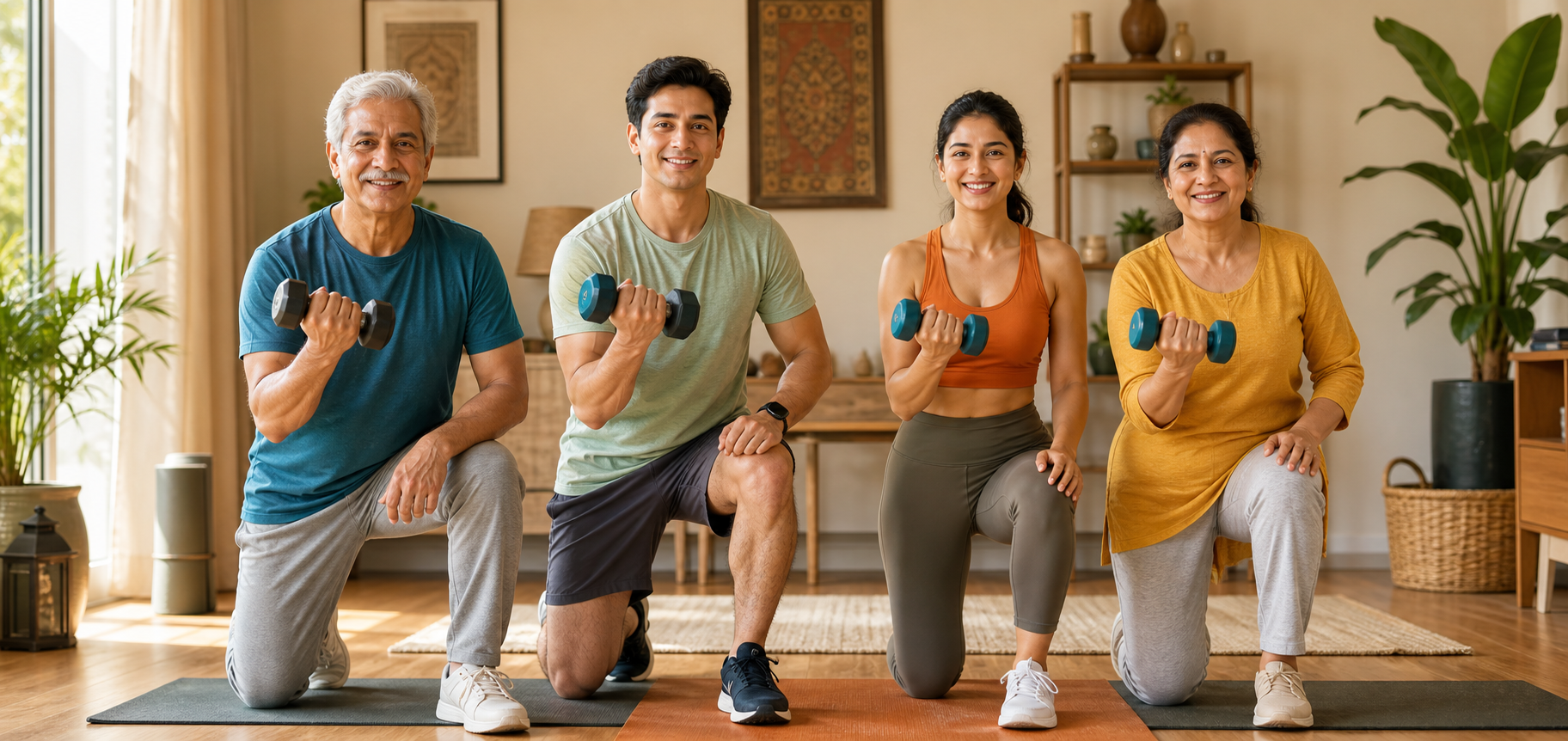
When I started teaching my parents home strength training, I did not begin with dumbbells, protein shakes, or a motivational speech at 6 a.m. I started with one goal: help them move better, feel stronger, and stay independent.
Like many Indian parents, mine are always busy doing something. A walk to the market, stairs at home, carrying groceries, helping with the grandkids, or simply getting up after a long chai break. But being active is not always the same as building strength.
This routine is for people over 50 who have never worked out before. If you are a millennial or Gen Z adult reading this, share it with your parents or grandparents and try the first few movements together.
Before you start
- Move slowly and breathe normally.
- Stop for sharp pain, dizziness, or chest discomfort.
- Use a chair, wall, or counter for support.
- Check with a doctor first after recent surgery or with a heart condition or significant joint pain.
1. Chair Squat
Works: thighs, hips, glutes, and core.
A useful beginner move because it practises sitting down and standing up with control.
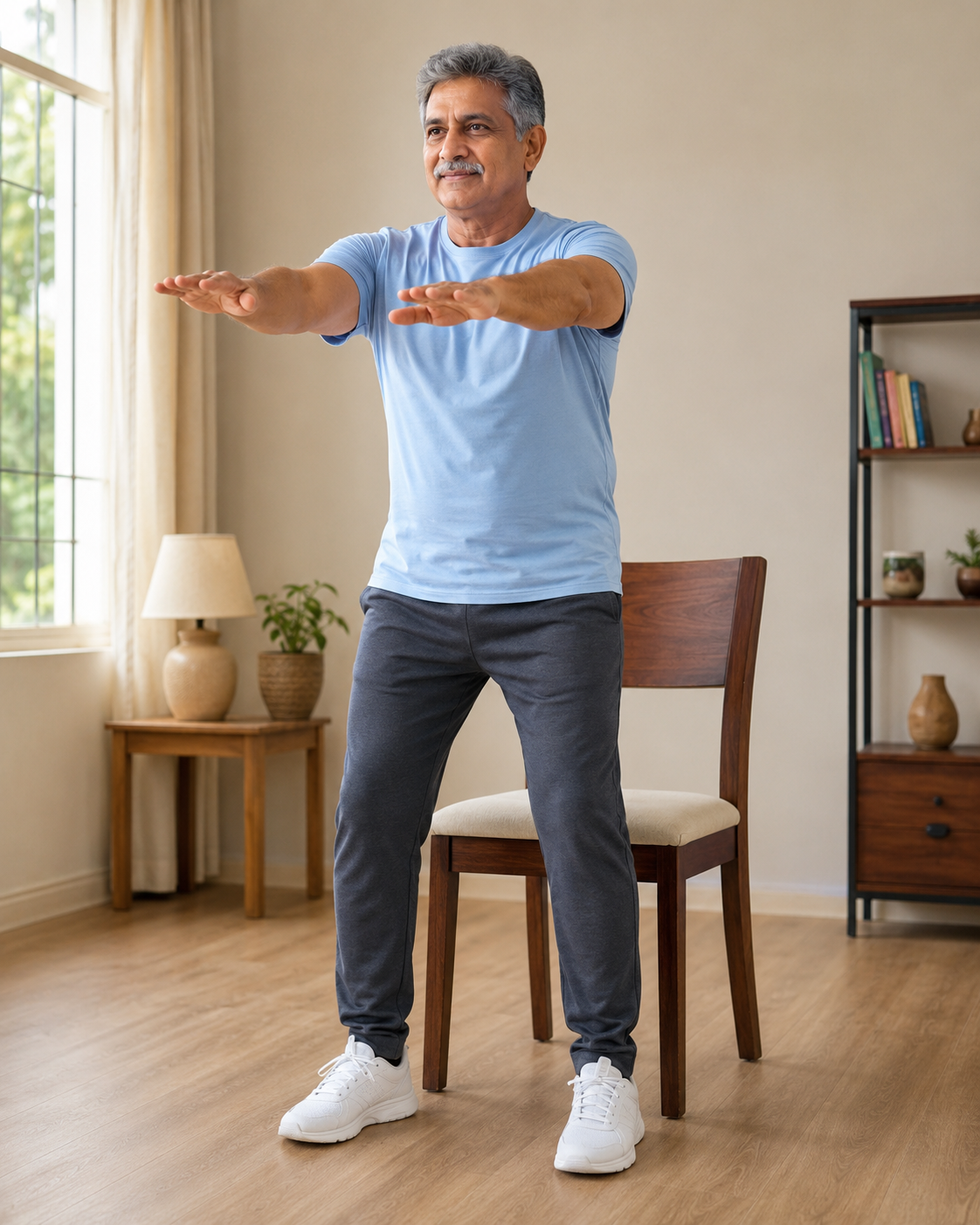
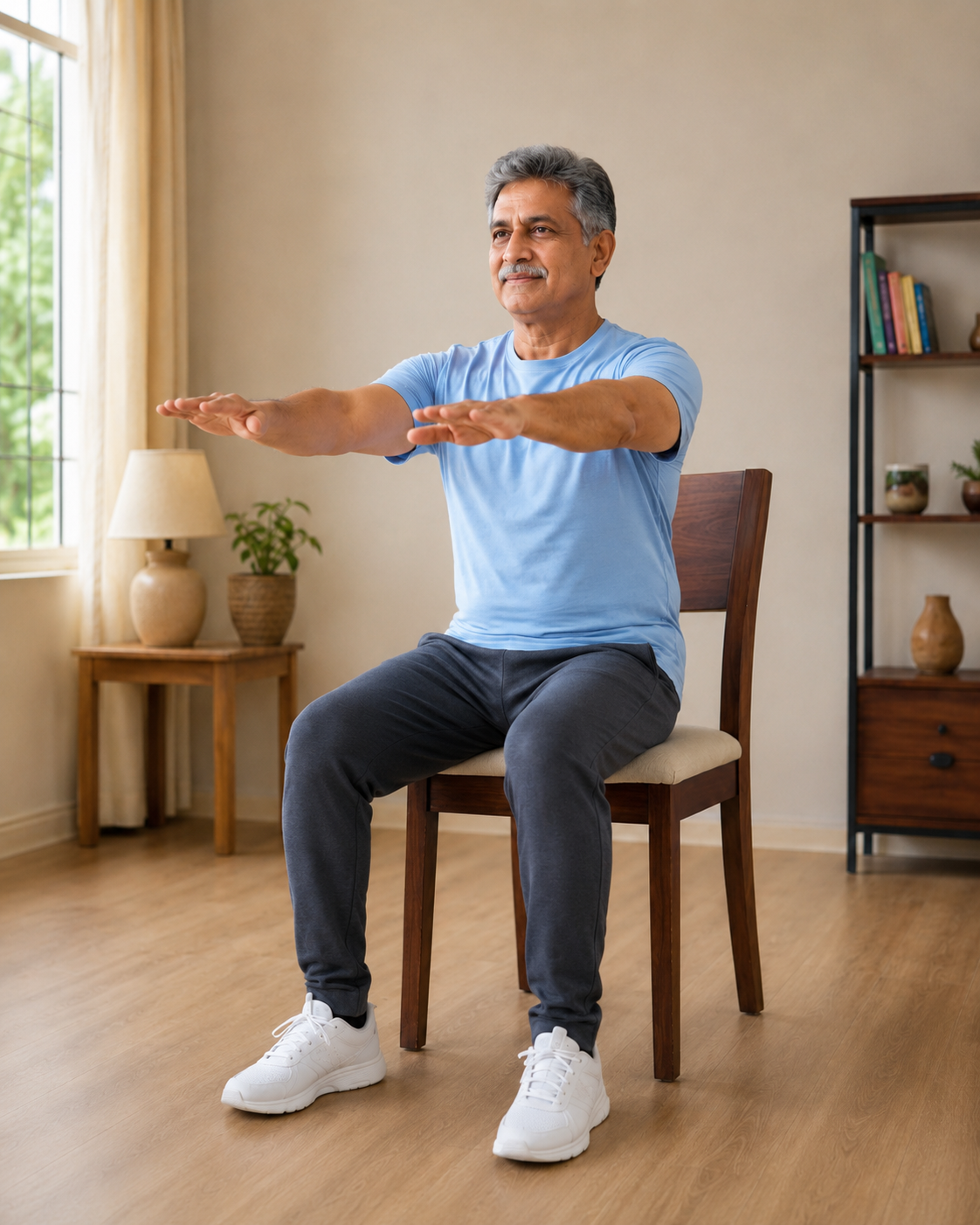
How to do it
- Stand in front of a sturdy chair.
- Sit back slowly until you touch the chair.
- Stand by pushing through your heels.
Short cue: Keep the chest open, knees comfortable, and move like you are sitting down gently.
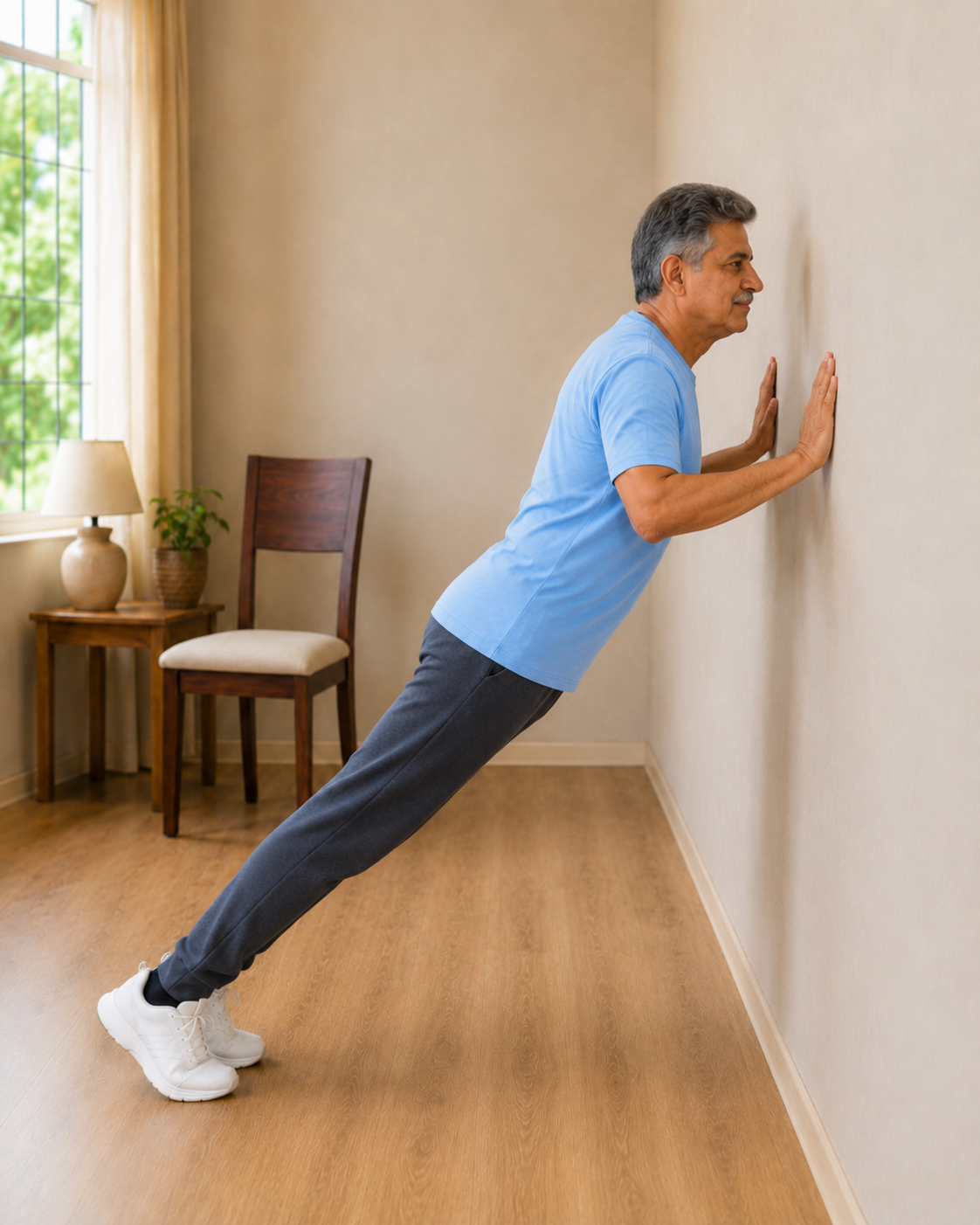
2. Wall Push-Up
Works: chest, shoulders, arms, and upper back.
Kinder on the wrists and shoulders than floor push-ups, while still building upper-body strength.
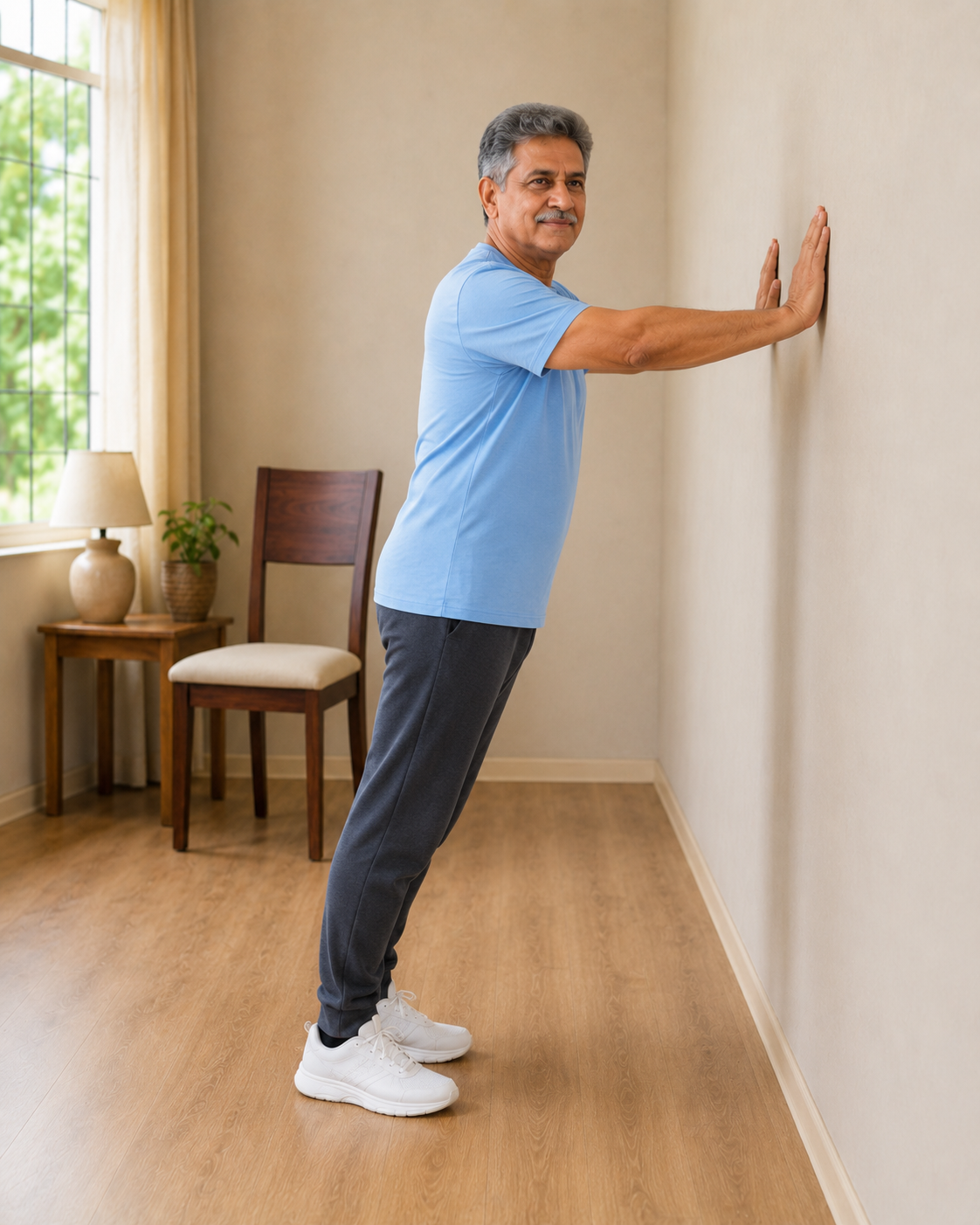
How to do it
- Stand an arm’s length from a wall.
- Place both hands on the wall at chest height.
- Bend your elbows and lean in slowly.
- Push the wall away to return.
Short cue: Keep the body straight like a plank from head to heels.
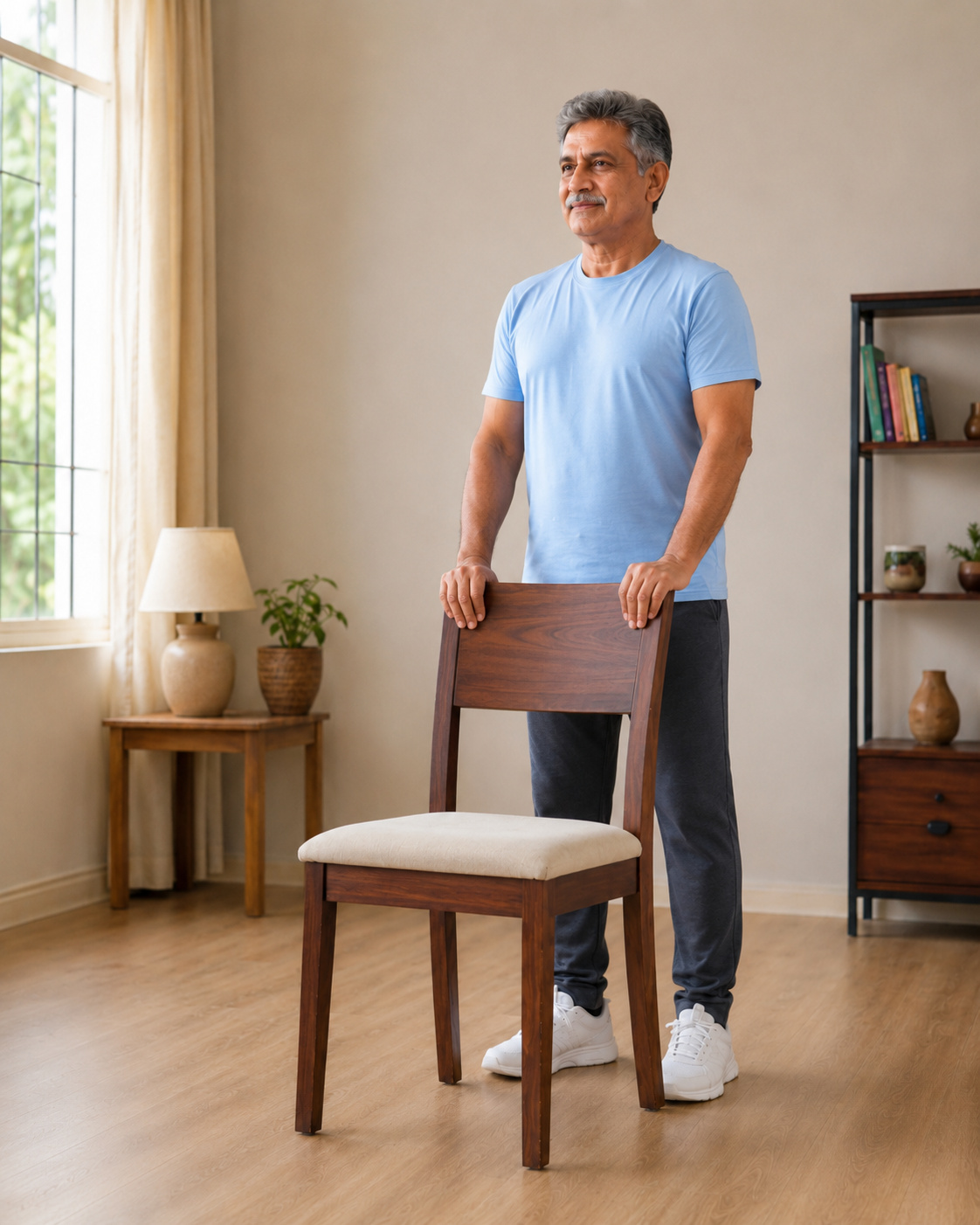
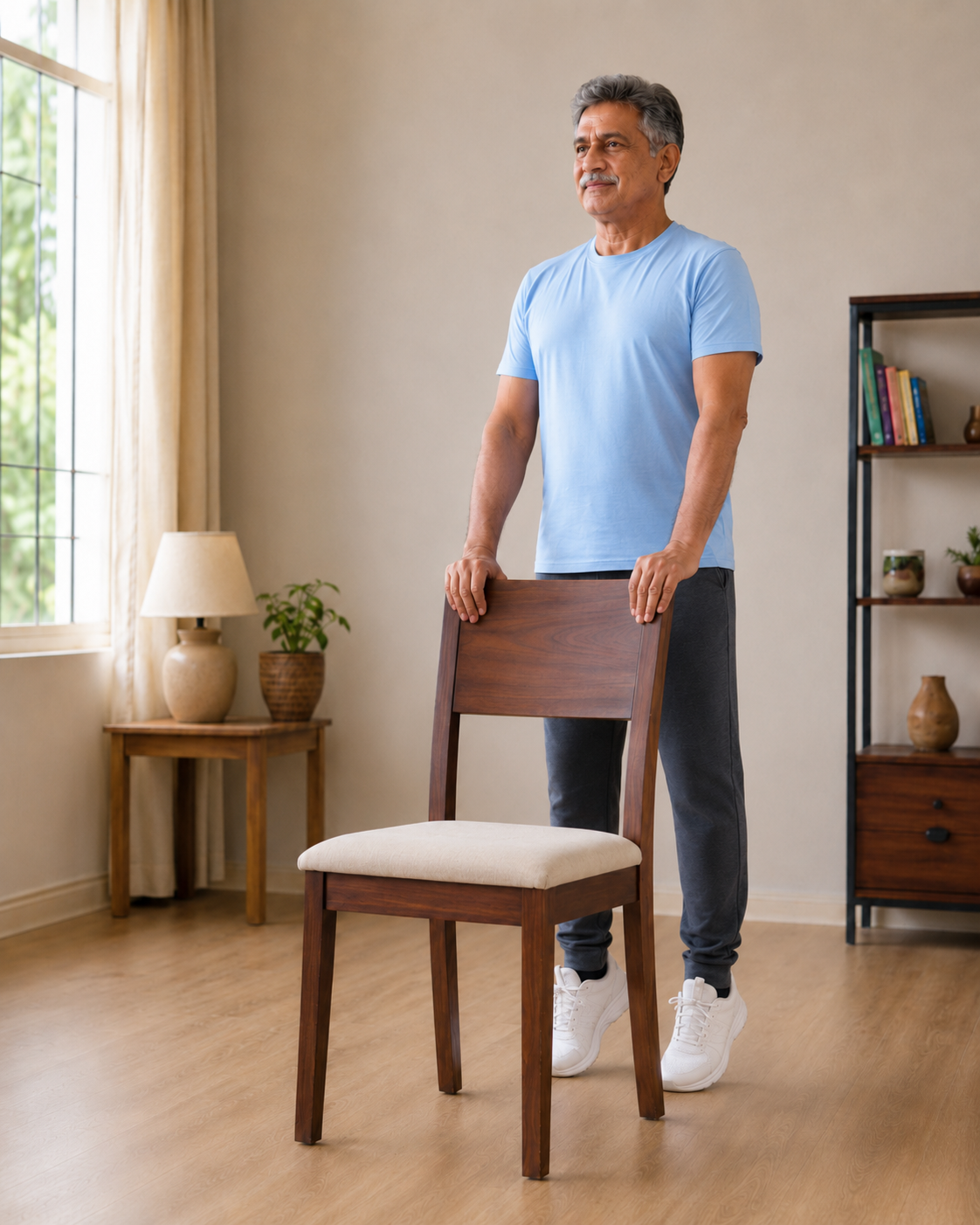
3. Standing Calf Raise
Works: calves, ankles, and balance.
Builds walking strength and steadier ankles for stairs and curbs.
How to do it
- Stand behind a chair or near a wall.
- Lift both heels slowly.
- Pause for a second.
- Lower your heels with control.
Short cue: Rise tall, do not rush, and use support if balance feels shaky.
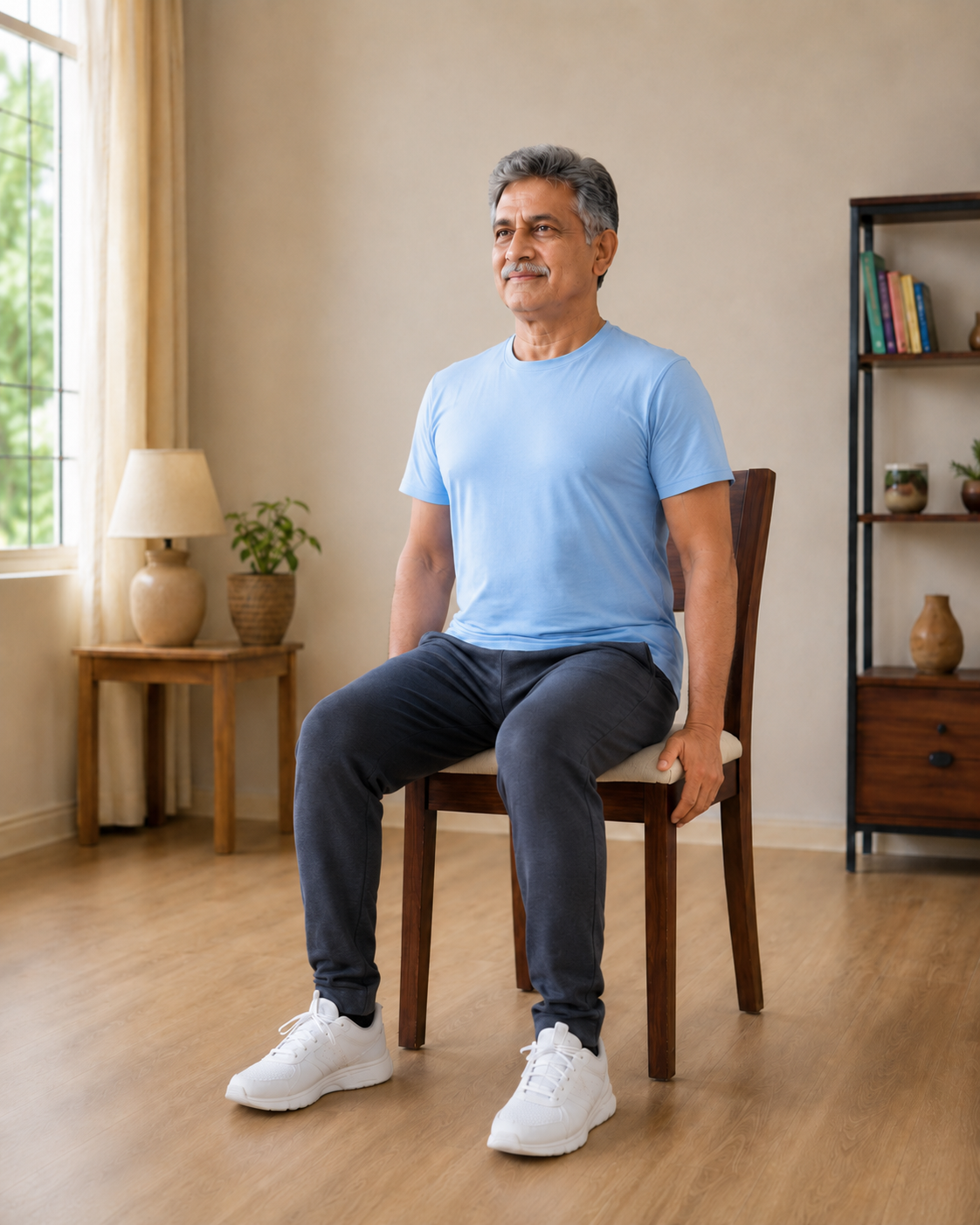
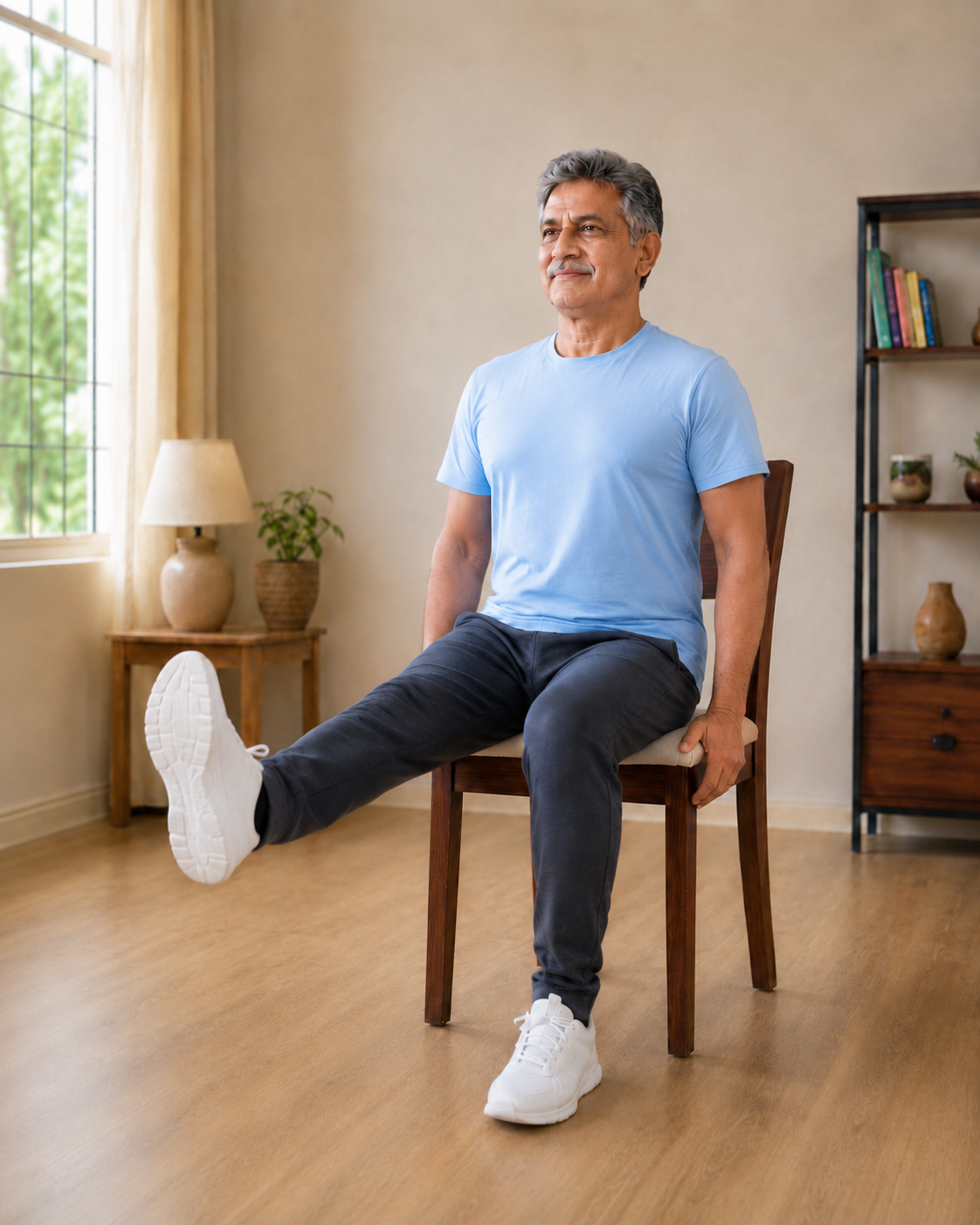
4. Seated Knee Extension
Works: front thighs and knee control.
A gentle starting point when knees feel weak after sitting for a while.
How to do it
- Sit upright on a chair.
- Straighten one leg in front of you.
- Hold briefly.
- Lower slowly and switch sides.
Short cue: Move one leg at a time and keep the upper body still.
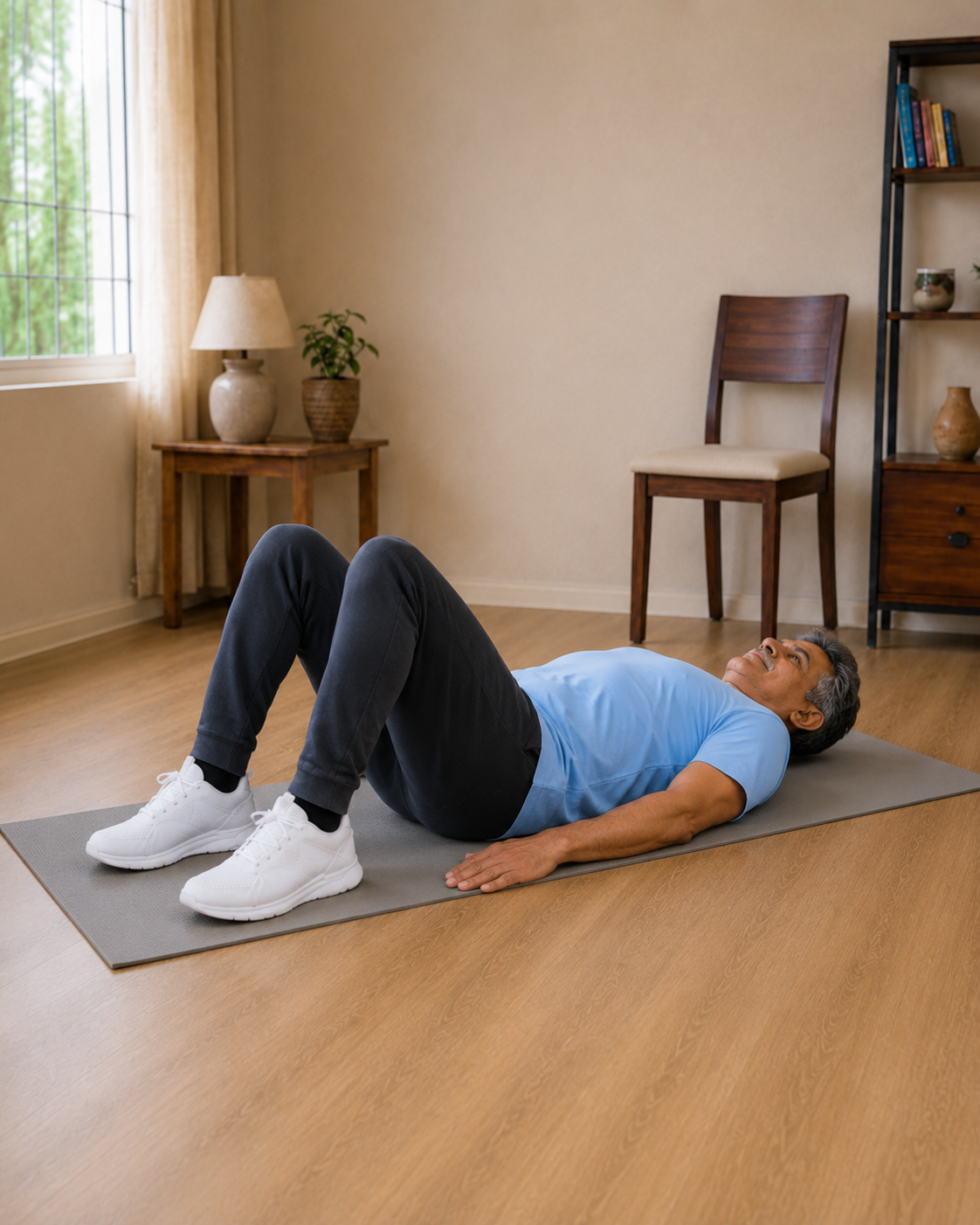
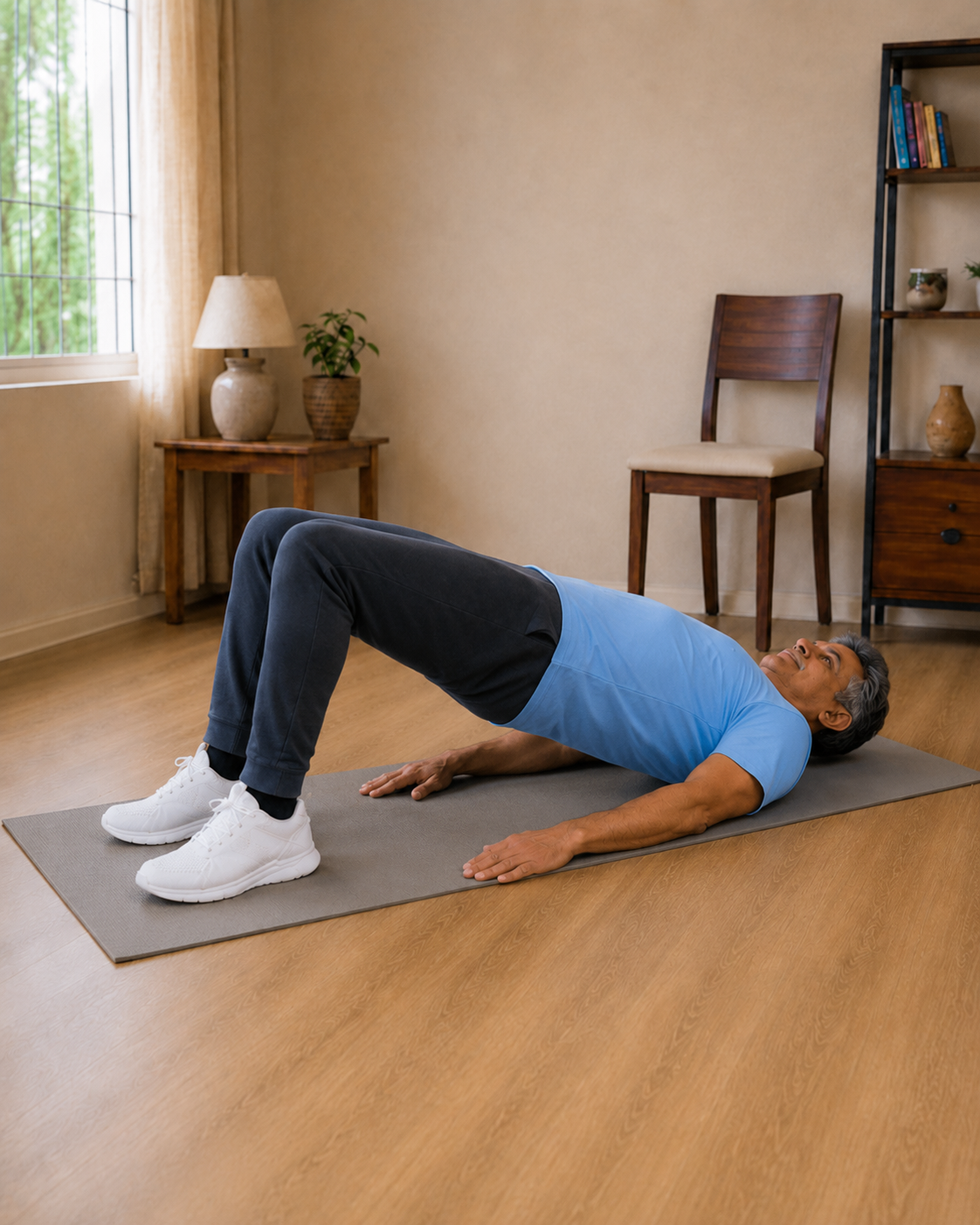
5. Glute Bridge
Works: glutes, hamstrings, lower-back support, and core.
Strengthens the backside of the body, which can weaken after years of sitting.
How to do it
- Lie on your back with knees bent and feet flat.
- Tighten the glutes.
- Lift your hips into a gentle straight line.
- Lower slowly.
Short cue: Lift with the hips, not the lower back.
6. Bird Dog
Works: core, back, glutes, and balance.
A calm way to train stability: the core, back, hips, and brain work together.
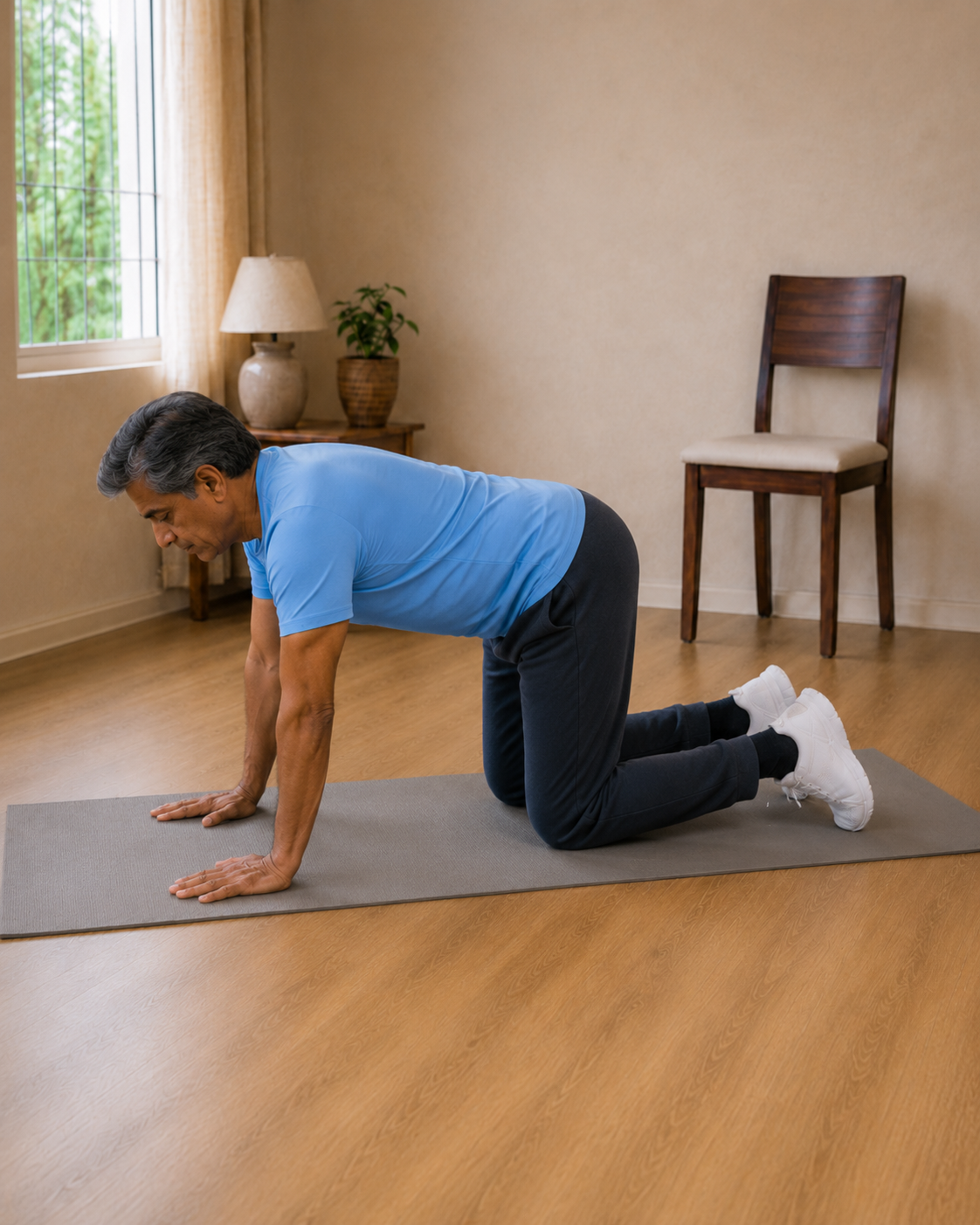
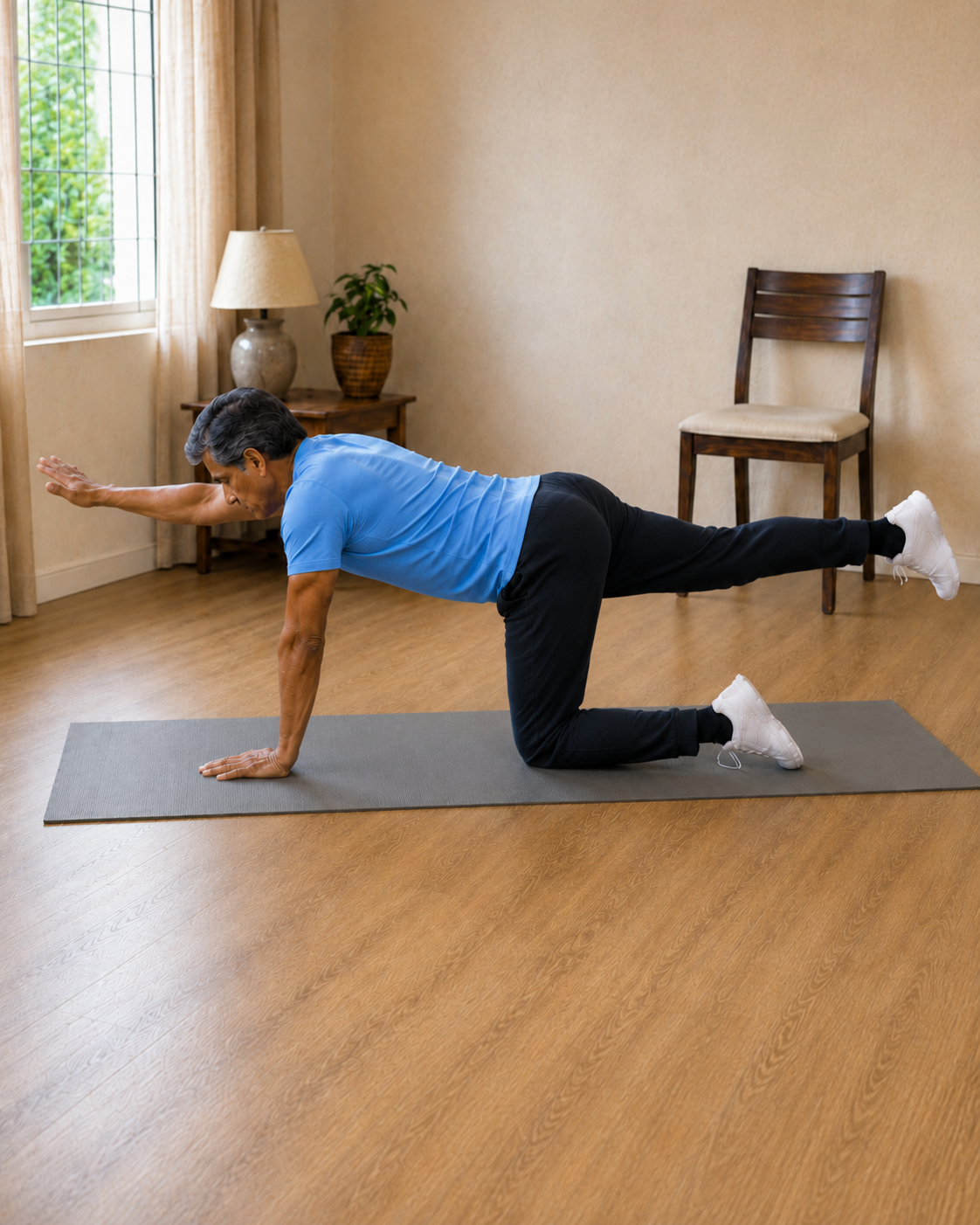
Note: the AI-rendered Bird Dog end pose is not accurate.
The end position should show the opposite arm and leg fully extended while the hips stay level and the back stays long and steady.
How to do it
- Start on hands and knees.
- Extend one arm forward and the opposite leg back.
- Keep the torso steady.
- Return and switch sides.
Short cue: Keep the hips level and avoid twisting.
7. Side Leg Raise
Works: outer hips and balance muscles.
Strong hips help with walking, standing in the kitchen, and climbing stairs.
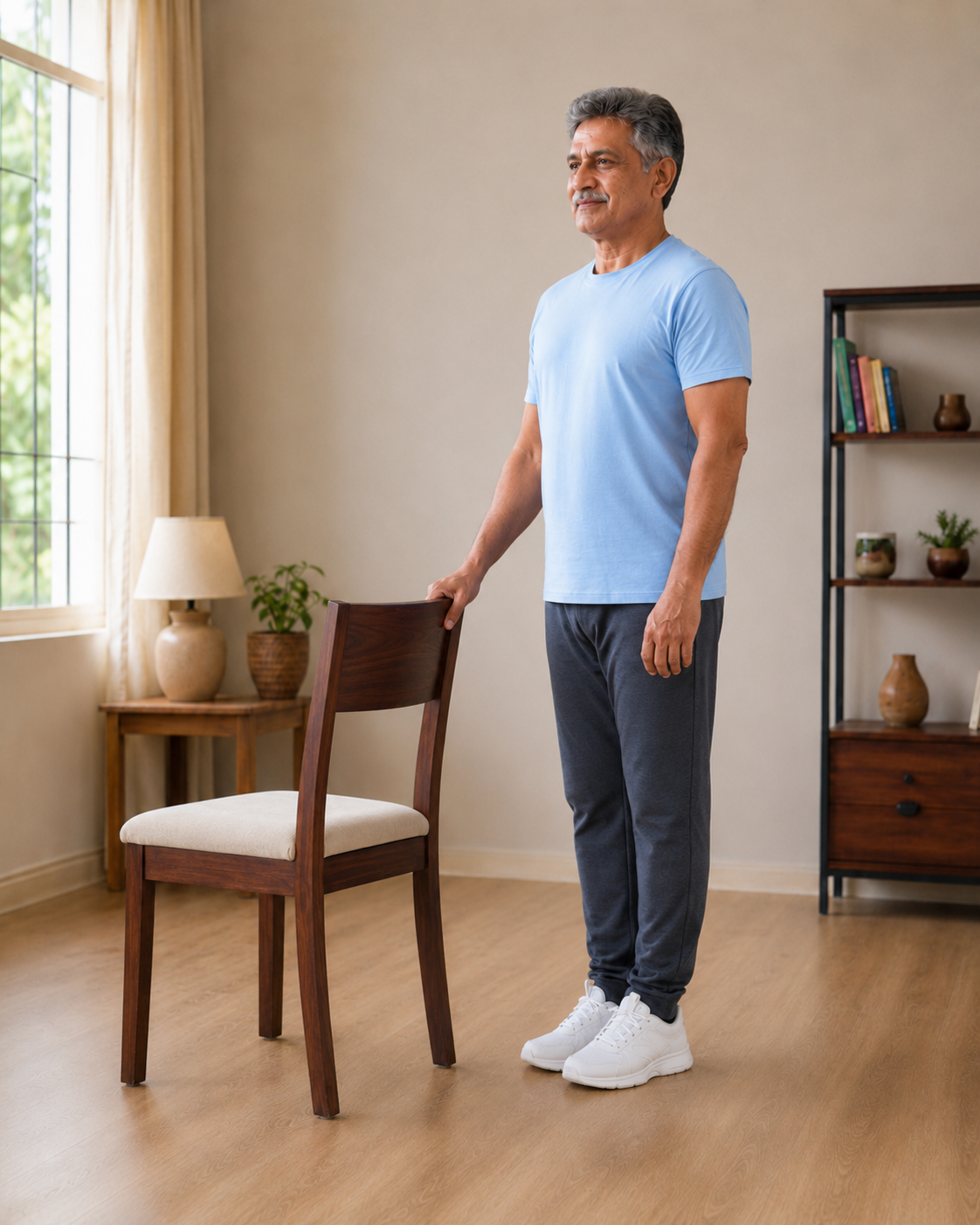
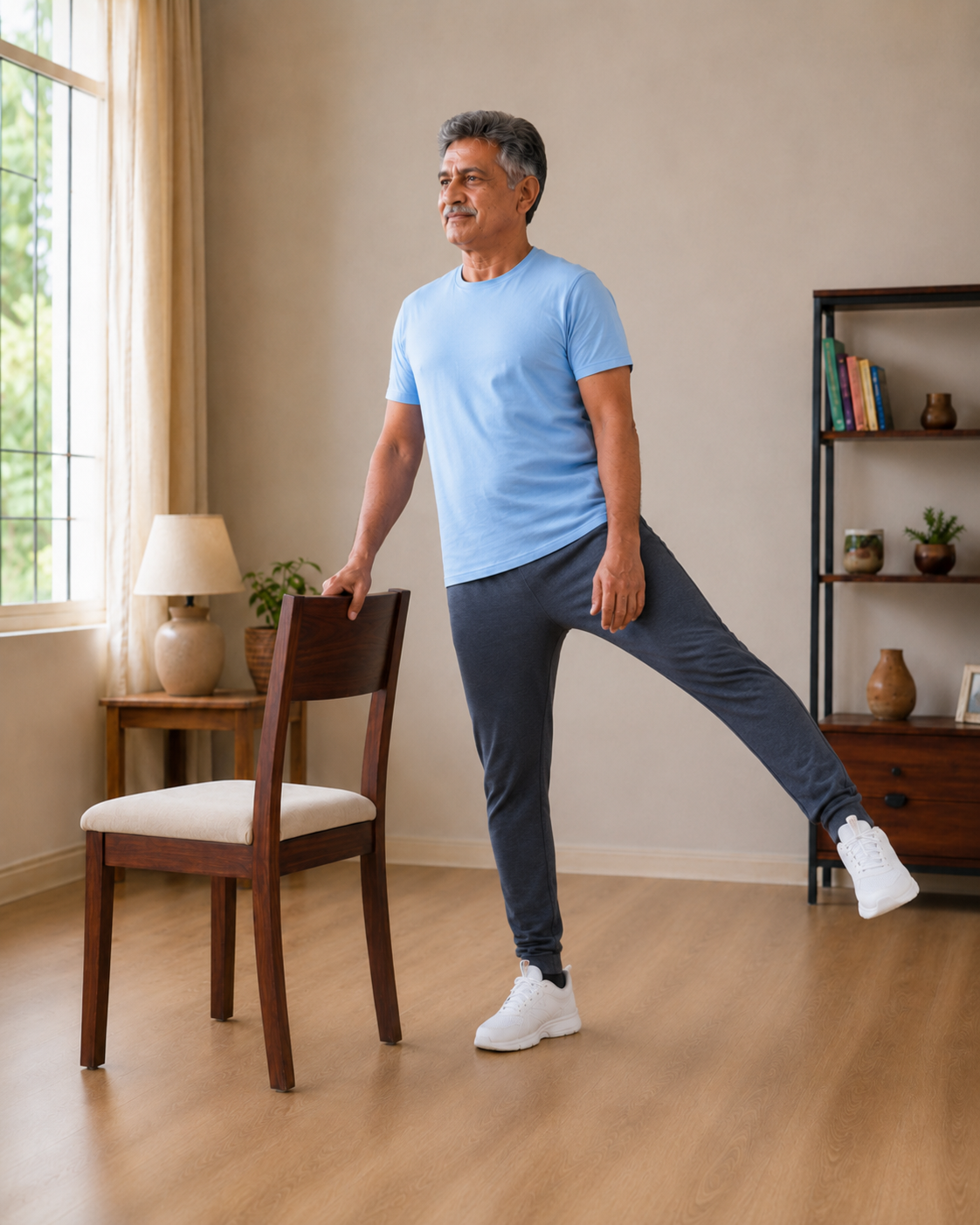
How to do it
- Stand beside a wall or chair.
- Lift one leg slowly to the side.
- Keep the body upright.
- Lower with control and repeat on the other side.
Short cue: Do not lean away from the lifting leg.
8. Overhead Reach
Works: shoulders, upper back, and mobility.
Helps with everyday reaching, hanging clothes, or lifting a light bag.
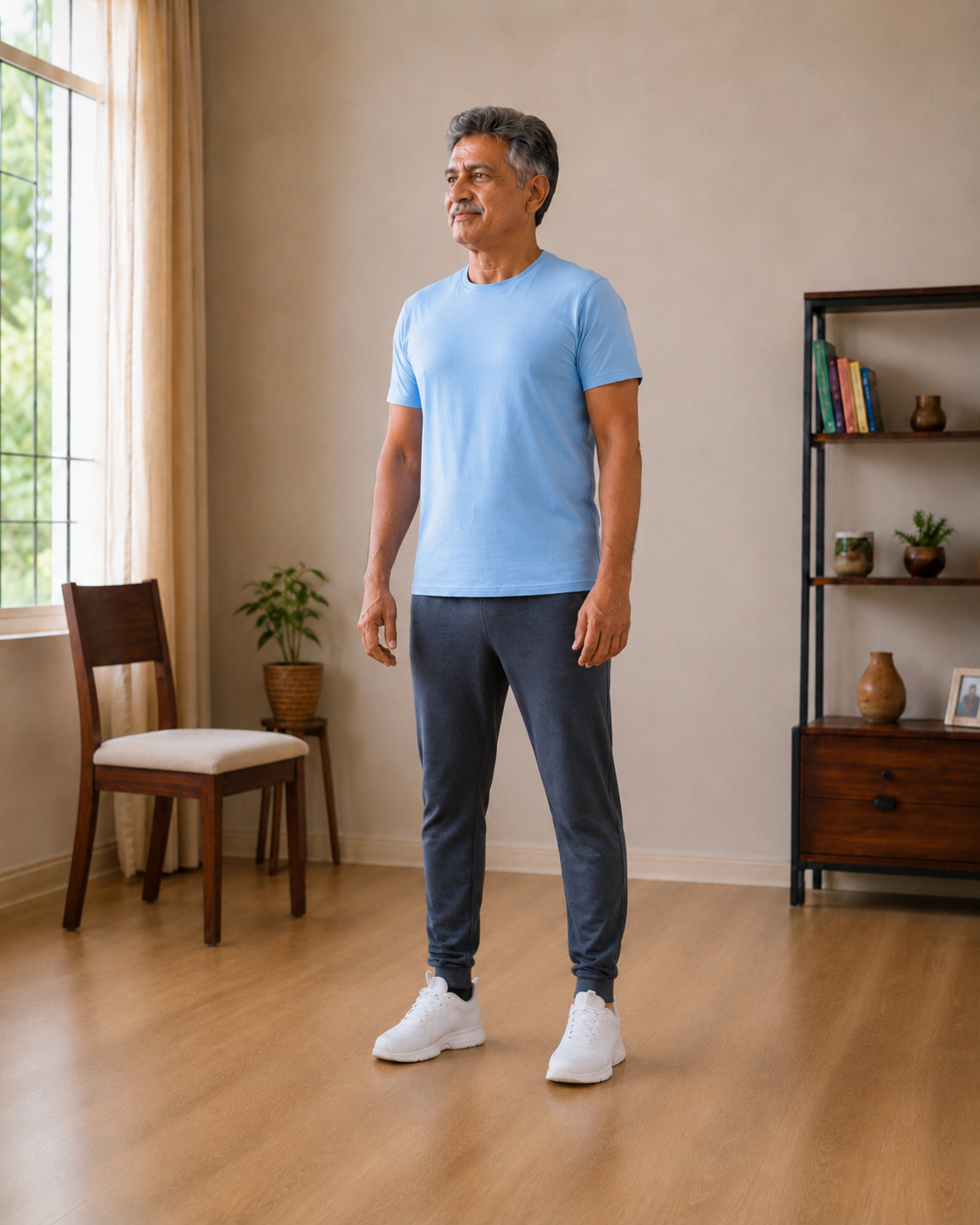
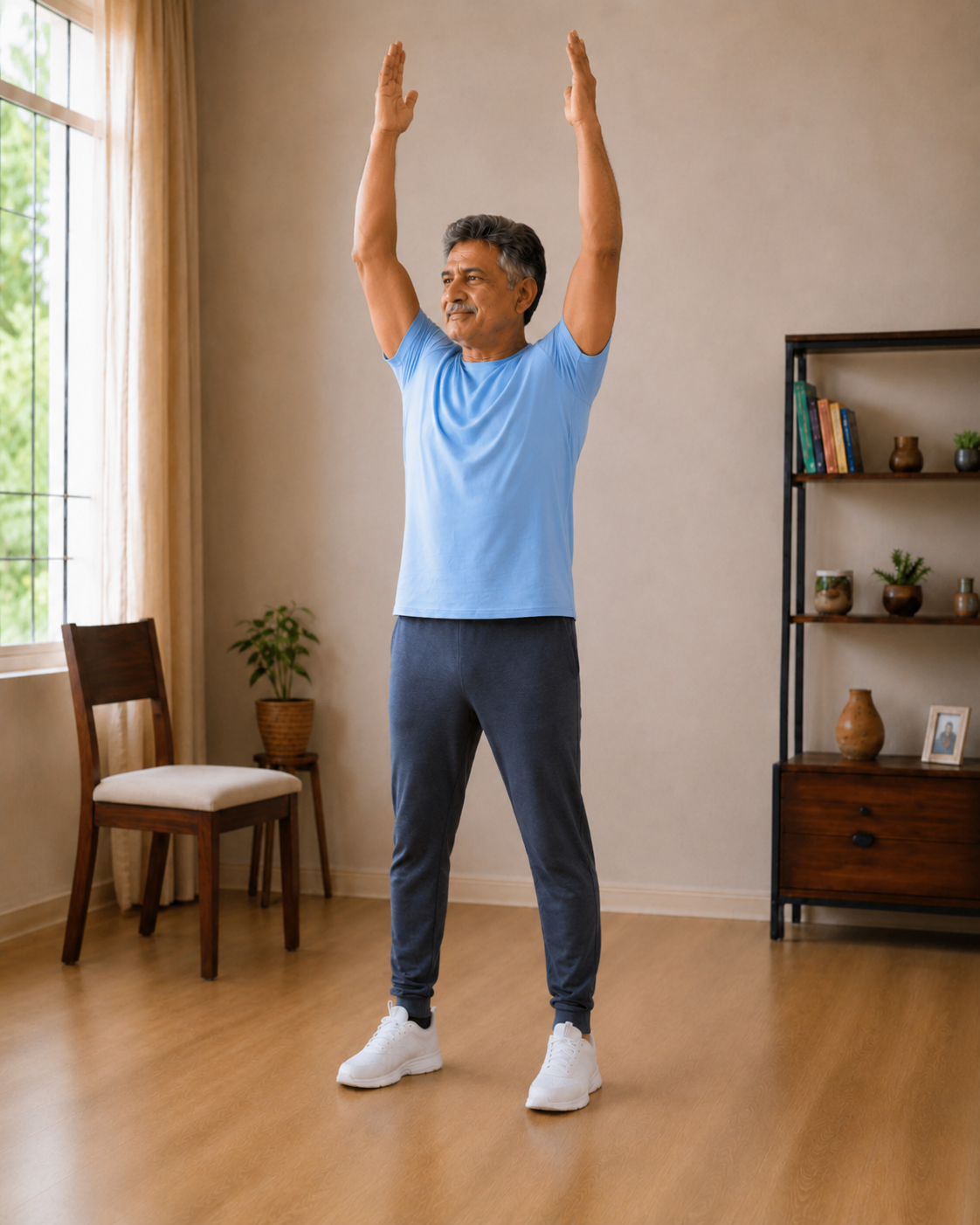
How to do it
- Stand tall with arms by your sides.
- Raise both arms overhead slowly.
- Reach up without arching the lower back.
- Lower your arms smoothly.
Short cue: Keep the ribs down and move smoothly.
A Simple Beginner Routine
Do one round, two or three times a week. A short routine that happens is better than an ambitious routine that becomes a forgotten New Year resolution.
If your parents already walk, keep walking. This routine is the next layer that makes that walking easier to keep.
When the chair squat, wall push-up, and calf raise start feeling steady, move on to Strong With Dumbbells: A Gentle Home Routine for Older Beginners.
And if they are still at the “I only walk” stage, read Walking Is Good, But It Is Not Enough first. That article explains why walking is the starting point, not the finish line.
- Chair Squat: 5 to 8 reps
- Wall Push-Up: 5 to 8 reps
- Calf Raise: 8 to 10 reps
- Seated Knee Extension: 6 to 8 each leg
- Glute Bridge: 5 to 8 reps
- Bird Dog: 4 to 6 each side
- Side Leg Raise: 6 to 8 each side
- Overhead Reach: 5 to 8 reps
What I Learned Teaching My Parents
Older beginners do not need a complicated plan or a fitness influencer shouting from a screen. They need confidence, stability, repetition, clear instructions, and a routine that feels safe.
One sturdy chair, a clear wall, and 15 to 20 quiet minutes are enough to begin. Try the first few movements with them, make it a small Sunday ritual, and celebrate the boring wins: an easier walk, less hesitation on the stairs, one more chair squat.
Final Thought
Strength training after 50 is not about chasing a six-pack or copying a workout reel. It is about staying strong enough to sit, stand, walk, climb stairs, carry groceries, play with children and grandkids, and live with more ease and health for as long as possible.
Start small. Stay consistent. Let the body relearn what it can do. If this made you think of your mum, dad, nani, nana, dadi, or dada, send it to them. A shared routine may be one of the most useful things in the family WhatsApp group.